NCERT Class 1 English (Mridang) Solutions
Chapter 4: The Cap-seller and the Monkeys
We have compiled the Mridang Class 1 Solutions Chapter 4 The Cap-seller and the Monkeys textbook exercises and questions comprehensively to help students practice and prepare for exams effectively.
Mridang Class 1 English Chapter 4 The Cap-seller and the Monkeys Question Answer
The Cap-seller and the Monkeys Question Answer Class 1
The Cap-seller and the Monkeys Questions and Answers
Let us speak
Do you have a cap? What is its colour?
Why do you think the monkeys threw the caps in the basket?
Answer:
The monkeys threw the cap because they mimic what they see.
The cap-seller threw his cap in the basket they also threw their caps.
What is the first sound of the words in each row?

The first letter sound is of words M.

The first letter sound is of words B.

Let us write
Circle the words that start with the same sound in each row.
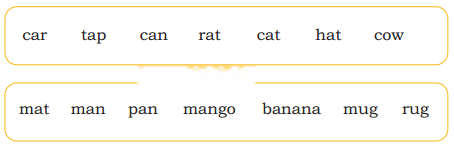
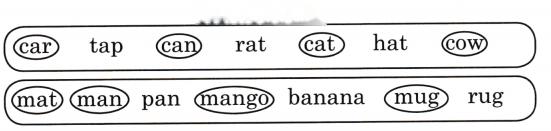
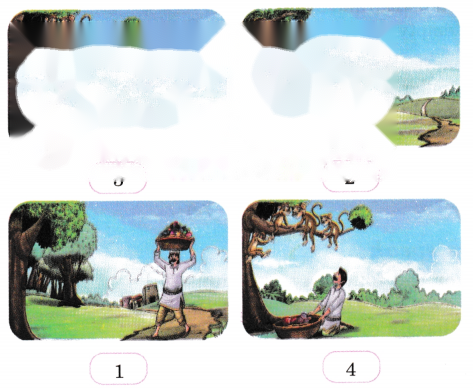
Write the numbers (1 – 4) next to the pictures according to the story.
Let’s colour and write
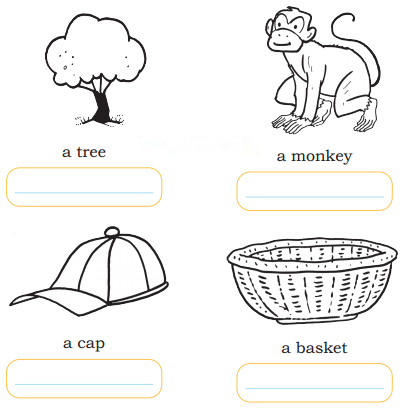
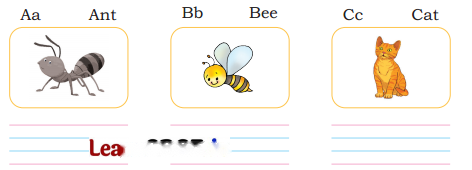
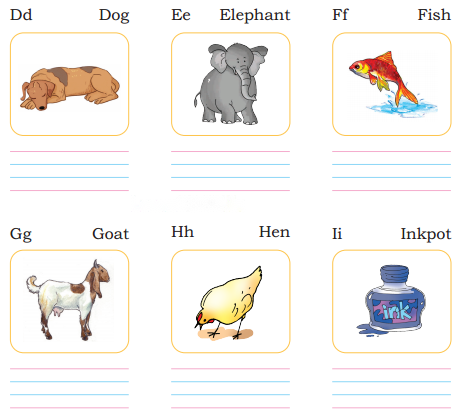
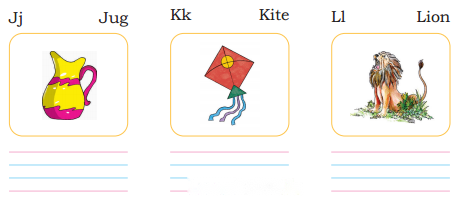
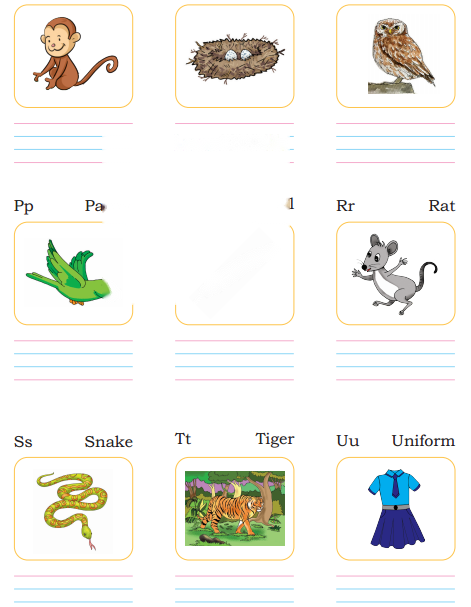
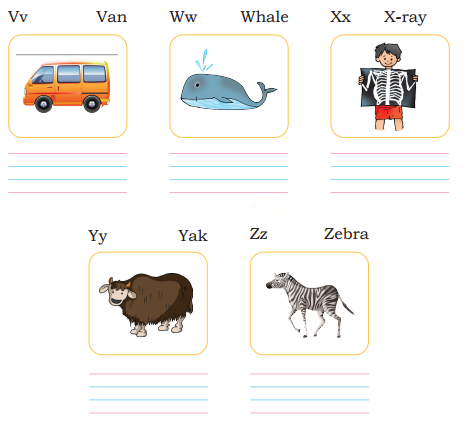
Cats, rats, ants and more! Write their names.
Let us Sing
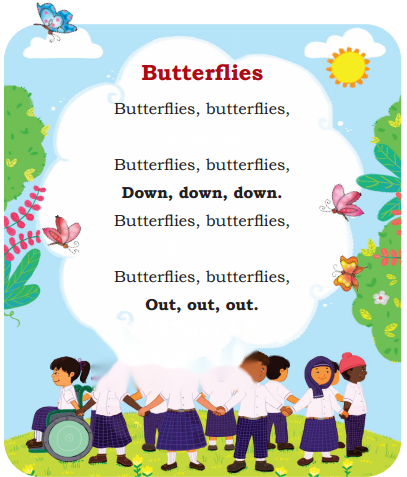
‘ Would you like to replace butterflies with anything else? Try
Answer:
Yes, I can replace butterflies with pigeons.
Let us speak
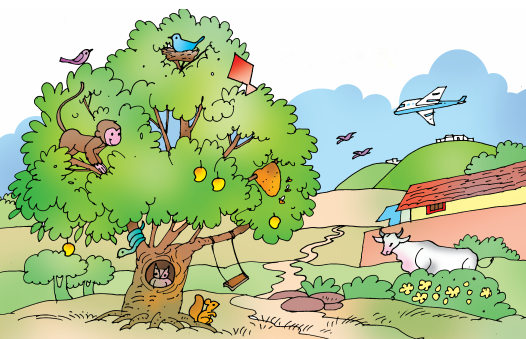
Child: I see birds, a nest, a kite, a beehive, a snake, a
monkey, an owl, a swing and mangoes on the tree.
Teacher: Look down! What do you see on the ground?
Child: I see a squirrel, a river, a cow and houses on the ground.
Teacher: Look up! What do you see in the sky?
Child: I see birds and an aeroplain in the sky.
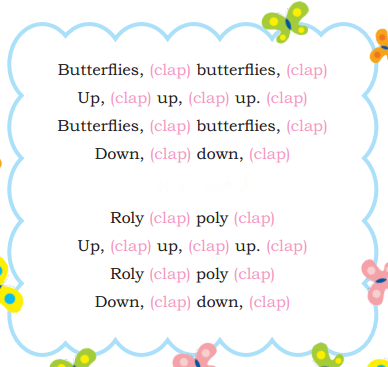
Say and clap
Say aloud each line of both the poems, clapping for every word.
Let us write
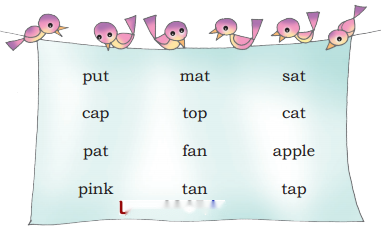
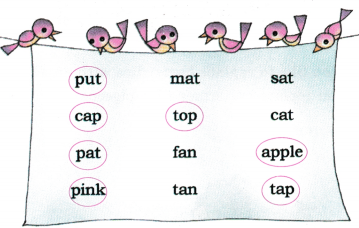
Encircle the words that have ‘p’ in them.
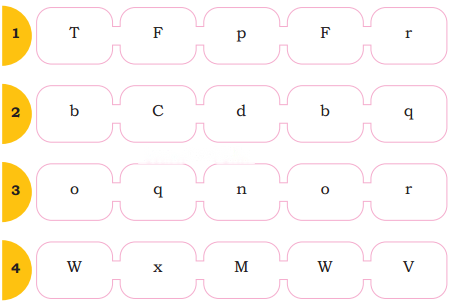
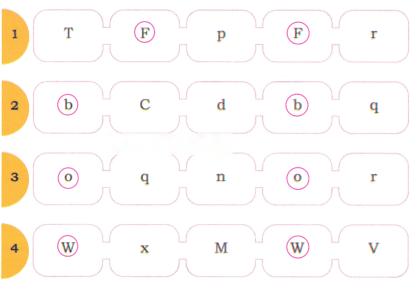
Encircle the matching letters in each row.
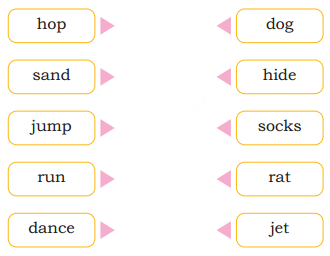
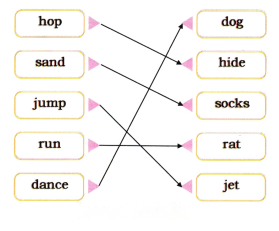
Match the words with the same initial syllable.
Let us speak
Listen and repeat
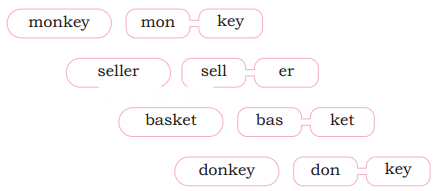
Some words have two syllable. Notice the words below:
Answer:
Do it yourself.
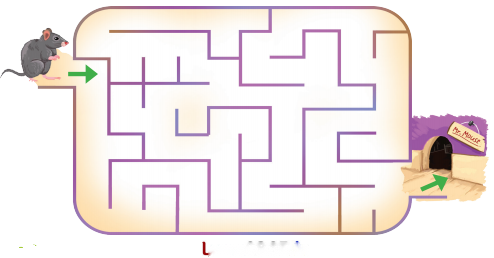
Help the mouse reach its home
Let us listen
Close your eyes and listen to the words said by your teacher.
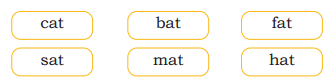
What is the first sound in each of these words?
What is common in all these words?
Answer:
Rhyming words.
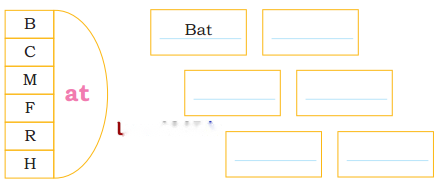
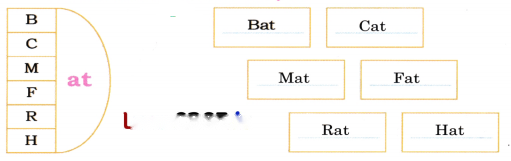
Let us make words by adding one letter to at as shown.
The first has been done for you.
Listen and do the actions that your teacher says:
Now listen to the following words. Do you know what they mean? Ask your teacher.
Let us read
Try to read the story ‘Catch me if you can’ again by yourself.
Answer:
Do it yourself.
Let us do
What shall we make? A cat and a rat?
Answer:
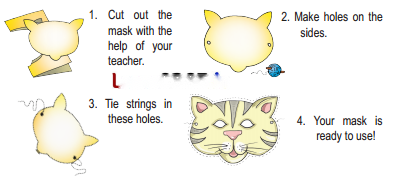
Look at the picture on page 72 and do yourself.
Let us explore
Look at the insects, flowers, birds, animals and trees around your home.
Draw some of these and tell your friends more about them.
Answer:
Do it yourself.
Let us do
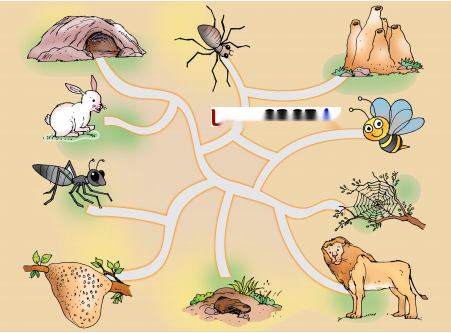
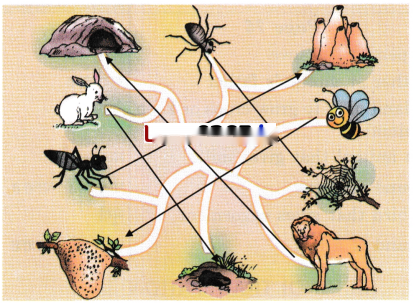
Help these animals find their homes.
Mridang Class 1 English Chapter 4 The Cap-seller and the Monkeys Summary
Mridang Class 1 Chapter 4 The Cap-seller and the Monkeys Summary in English
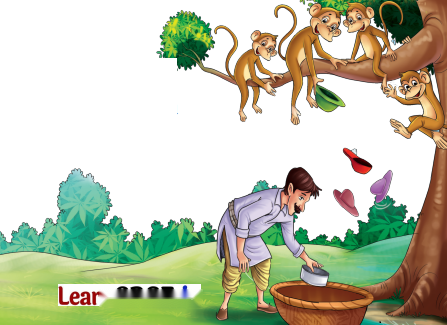
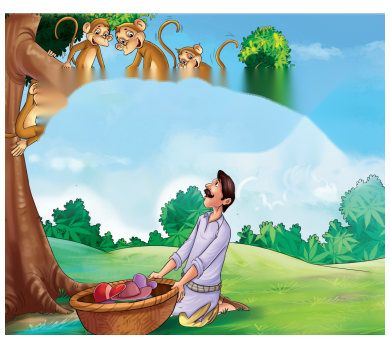
A cap-seller carried caps in a basket on his head. One day, he was napping under a tree where monkeys lived. The monkeys stole his caps and wore them. Upon waking, the cap-seller noticed the theft.
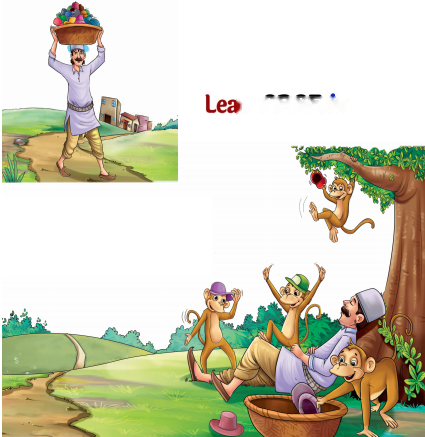
He waved his hands at the monkeys, who mimicked him. Then he had an idea to retrieve his caps. He threw his own cap into the basket, the monkeys copied him, allowing him to collect all the caps.
Catch me if you can
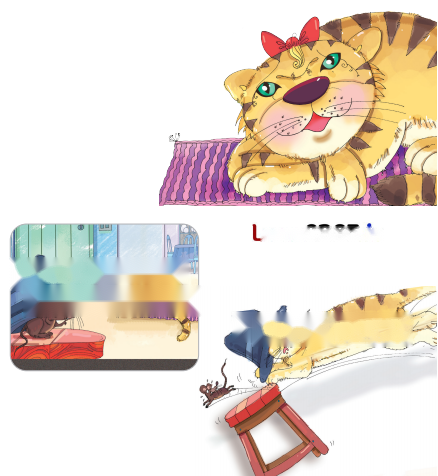
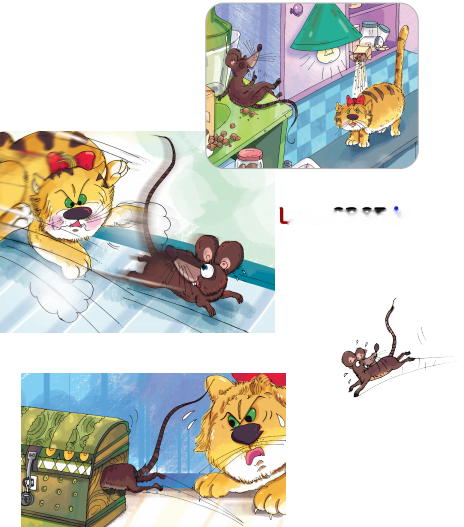
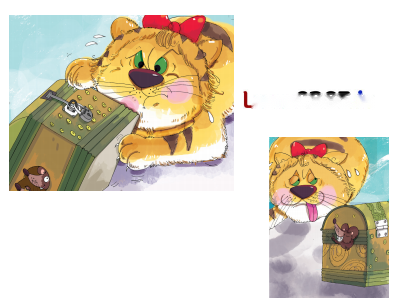
A confident fat cat threatened to catch a little rat. Upon seeing the cat, the rat hid in various places, including a hat and a box. Despite the cat’s attempts, the rat successfully evaded capture and taunted the cat from inside the closed box.
Mridang Class 1 Chapter 4 The Cap-seller and the Monkeys Summary in Hindi
एक टोपी-विक्रेता अपने सिर पर टोपियों की टोकरी ले जाता था। एक दिन, वह एक पेड़ के नीचे सो गया जिस पर बंदर रहते थे। बंदरों ने उसकी टोपियाँ चुराई और पहन ली। जब वह जागा, उसने चारों ओर देखा।
उसने बंदरों की ओर अपना हाथ हिलाया। जब उसने अपनी टोपी टोकरी में फेंकी, बंदरों ने भी टोपी-विक्रेता की नकल करके अपनी टोपियाँ नीचे फेंक दी। जिससे उसे सभी टोपियाँ वापस मिल गईं। टोपी-विक्रेता ने अपनी सभी टोपियाँ इकट्ठी की और खुशी-खुशी चला गया।
Catch me if you can
एक आत्मविश्वासी मोटी बिल्ली ने एक छोटे चूहे को पकड़ने की धमकी दी। चूहा बिल्ली को देखकर विभिन्न जगहों में छिपने लगा, जैसे कि एक टोपी और एक डिब्बे में। बिल्ली की कोशिशों के बावजूद, चूहा बचने में सफल रहा और बंद डिब्ये के अंदर से बिल्ली का उपहास किया।
Mridang Class 1 Chapter 4 The Cap-seller and the Monkeys Word Meanings
Words | Meanings in English | Meanings in |
Sold | to sell something | बेचना |
Caps | a thing worn on head | टोपी |
Basket | a container for holding something | टोकरी |
Cap-seller | a person who sell caps | टोपी विक्रेता |
Slept | to sleep | सोना |
Took away | to take something away | ले जाना |
Woke | to get up from sleep | उठ जाना |
Wearing | to wear something | पहनना |
Mridang Class 1 Chapter 4 The Cap-seller and the Monkeys Hindi Translation
Once there was a man who sold caps. He carried many caps in a basket on his head. He was a cap-seller. One day, he slept under a tree. There were monkeys on the tree. They came down from the tree. They took away all the caps. The cap-seller woke up. He saw the basket was empty! He looked around and above. The monkeys were wearing his caps.
The cap-seller shook his fists at the monkeys. They also did the same. The cap-seller scratched his head. The monkeys did the same. The cap-seller had an idea! He took off his cap and threw it into the empty basket. The monkeys also did the same. The cap-seller got all his caps back and went away happily.
अनुवाद
एक समय की बात है, एक आदमी था
जो टोपियाँ बेचता था। वह अपने सिर पर
बहुत-सी टोपियों की टोकरी ले जाता था।
वह एक टोपी-विक्रेता था।
एक दिन, वह एक पेड़ के नीचे सो
गया। पेड़ पर बंदर थे।
वे पेड़ से नीचे उतर आए।
उन्होंने सभी टोपियाँ उठा ली।
टोपी विक्रेता जागा।
उसने देखा कि टोकरी खाली थी! वह
चारों ओर ऊपर देखने लगा।
बंदर उसकी टोपियाँ पहन रहे थे।
टोपी-विक्रेता ने बंदर पर अपनी मुट्ठी
हिलाई। उन्होंने भी वैसा ही किया।
टोपी-विक्रेता ने अपना सिर खुजाया।
बंद्रों ने भी वैसा ही किया।
टोपी-विक्रेता को एक उपाय सूझा!
उसने अपनी टोपी उतारी और उसे खाली टोकरी में फेंक दिया।
बंदरों ने भी वैसा ही किया।
टोपी-विक्रेता ने अपनी सभी टोपियाँ
वापस पा ली और खुशी-खुशी चला गया।
Catch me if you can
A fat cat sat on a mat.
“I can catch you, little rat”,
said the cat.
A little rat saw her,
and hid in a hat.
“No, no, you can’t”,
said the rat.
The cat ran to catch the rat.
The rat ran and hid in a box.
The lid of the box did not open.
“Ha, ha! You can’t catch me,
big cat!”, said the rat.
अनुवाद
मोटी बिल्ली एक चटाई पर बैठी थी।
“मैं तुम्हें पकड़ सकती हूँ, छोटे चूहे”
बिल्ली ने कहा।
एक छोटे चूहे ने उसे देखा
और एक टोपी में छिप गया।
“नहीं, नहीं, तुम नहीं पकड़ सकती”
चूहे ने कहा।
बिल्ली चूहे को पकड़ने के लिए दौड़ी।
चूहा दौड़ा और एक डिब्बे में छिप गया।
डिब्बे का ढक्कन खुला नहीं।
“‘हा, हा! तुम मुझे पकड़ नहीं सकती,
बड़ी बिल्ली!”, चूहा ने कहा।
CBSE 2026-27 Board Exam Preparation & Practice Papers
Free Chapter Notes & Question Bank by BoardExams.in