NCERT Class 10 Science Solutions
Chapter 5: Life Processes
Did you check theLife Process Important Questionswhich were given in the previous Board Papers?
In this article, we have covered all the important topics in the exercises and each answer comes with a detailed explanation to help the class 10 students to understand concepts better. Read on to find out everything about NCERT class 10 science book activities solutions chapter 6.
Before getting into the details ofclass 10 science chapter 6 activities solutions:
- Life Processes
- What Are Life Processes?
- Nutrition
- Respiration
- Transportation
- Excretion
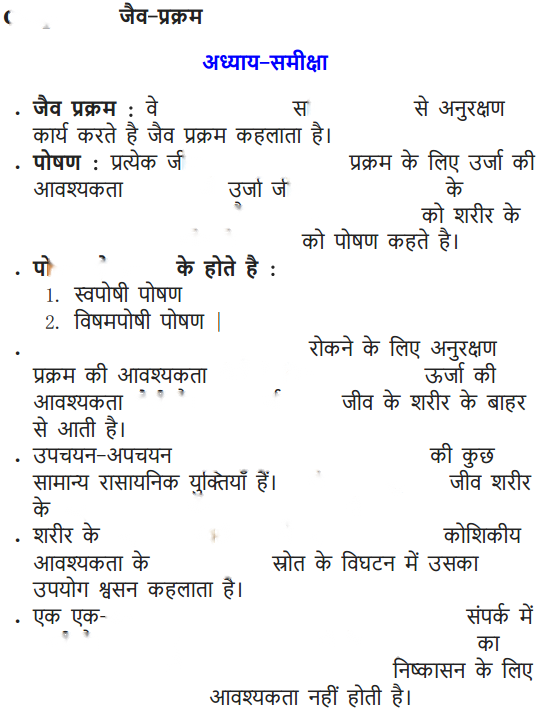
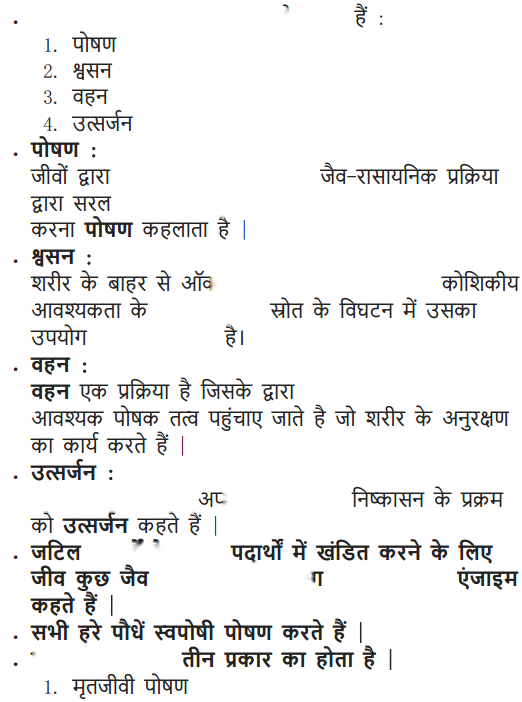
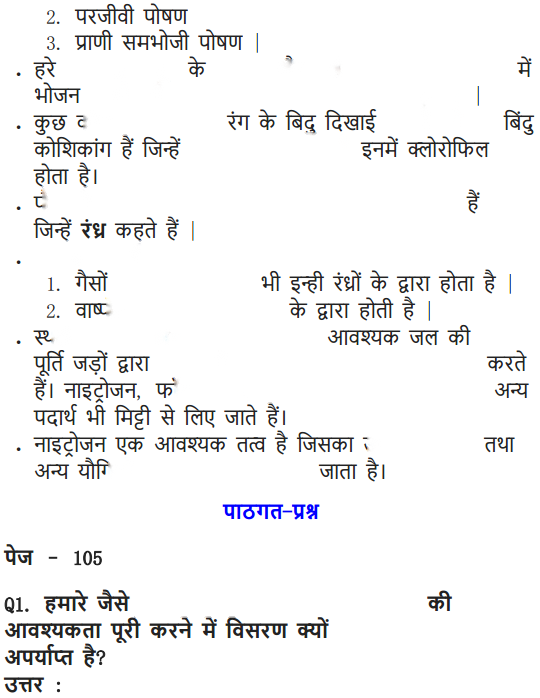
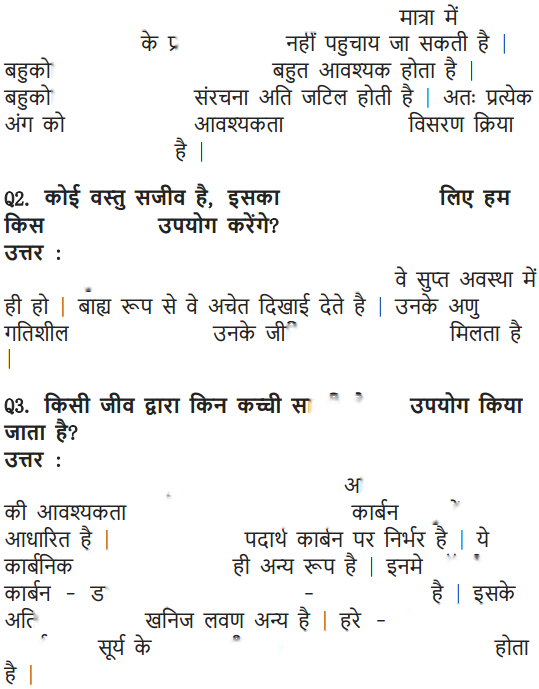
- जैव-प्रक्रम कक्षा 10 विज्ञान हिंदी में
- Life Processes Class 10 Notes
- Life Processes NCERT Exemplar Solutions
- Life Processes Class 10 Extra Questions
- Class 10 Life Processes Mind Map
Page Number: 95
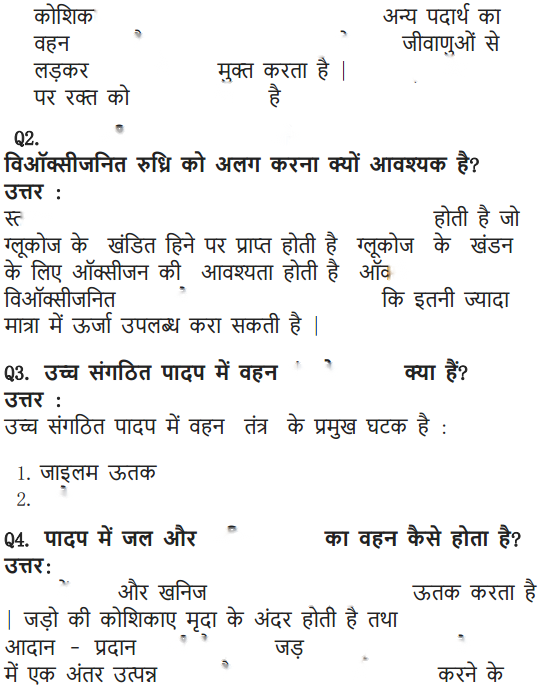
Why is diffusion insufficient to meet the oxygen requirements of multicellular organisms like humans ?
What criteria do we use to decide whether something is alive ?
What are outside raw materials used by an organism ?
What processes would you consider essential for maintaining life ?
(i) Nutrition
(ii) Respiration
(iii) Transportation
(iv) Excretion
Page Number: 101
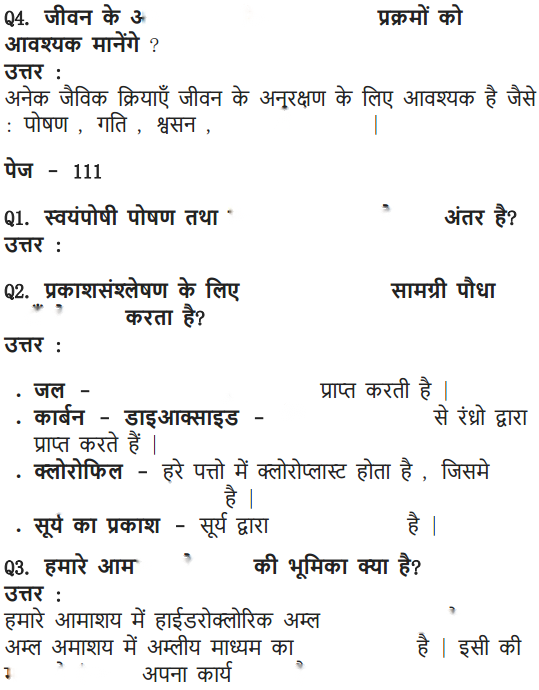
What are the differences between autotrophic nutrition and heterotrophic nutrition ?
Autotrophic nutrition | Heterotrophic nutrition |
(i) In this mode of nutrition an organism makes or synthesizes its own food. | (i) In this mode of nutrition an organism cannot make or synthesize its own food |
Organisms use simple inorganic materials like carbon dioxide and water and synthesise their food in presence of sunlight. | (ii) Organisms cannot make their own food from simple inorganic matter and depend on other organisms for their food. |
(iii) All green plants and some algae undergo this mode of nutrition. | (iii) All the animals, most bacteria and fungi undergo this mode of nutrition. |
Where do plants get each of the raw materials required for photosynthesis ?
(ii) Water : Plants absorb water from the soil through roots and transport to leaves.
(iii) Sunlight : Plants get sunlight from the sun.
(iv) Chlorophyll : It is present in chloroplast found in green leaves and green parts of plants.
What is the role of the acid in our stomach ?
(i) To make acidic medium which is necessary for the activation of the enzyme pepsin.
(ii) To kill bacteria which the food may contain.
What is the function of digestive enzymes ?
How is the small intestine designed to absorb digested food ?
Page Number: 105
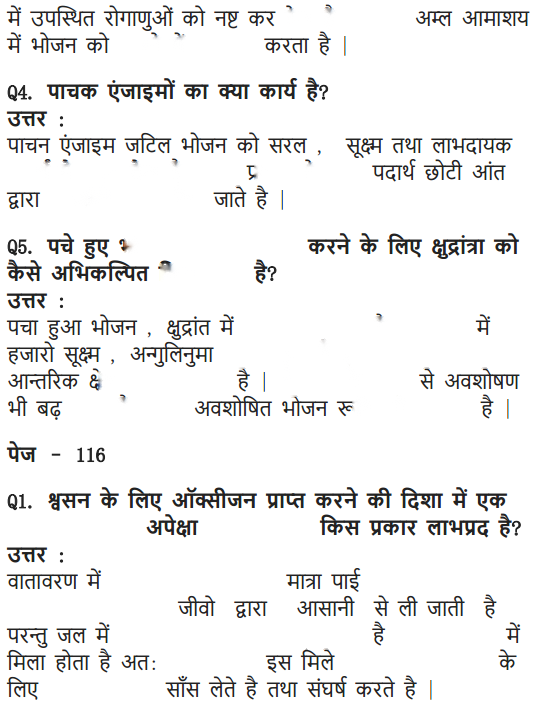
What advantage over an aquatic organism does a terrestrial organism have with regard to obtaining oxygen for respiration ?
Terrestrial organisms take oxygen from the oxygen-rich atmosphere through respiratory organs. Hence, they have much less breathing rate than aquatic organisms.
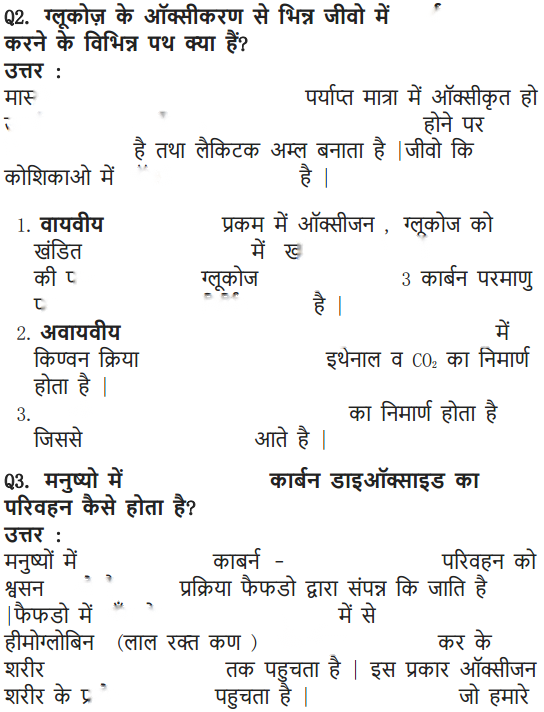
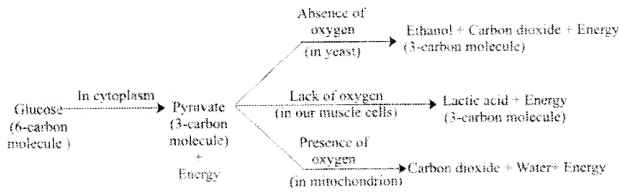
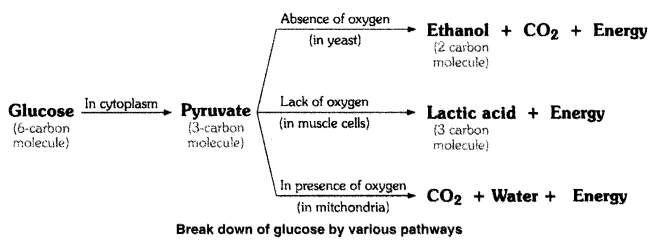
What are the different ways in which glucose is oxidised to provide energy in various organisms ?
Further break down of pyruvate takes place in different ways in different organisms.
(i) Anaerobic respiration : The anaerobic respiration in plants (like yeast) produces ethanol and carbon dioxide as end products.
(ii) Aerobic respiration : In aerobic respiration break down of pyruvate takes place in presence of oxygen to give rise three molecules of carbon dioxide and water. The release of energy in aerobic respiration is much more than in anaerobic respiration.
(iii) Lack of oxygen : Sometimes, when there is lack of oxygen especially during physical exercise, in our muscles, pyruvate is converted into lactic acid (3 carbon molecule compound). Formation of lactic acid in muscles causes cramp.
How is oxygen and carbon dioxide transported in human beings ?
(ii) Transport of carbon dioxide : Carbon dioxide is more soluble in water. Therefore, it is mostly transported from body tissues in the dissolved form in our blood plasma to lungs. Here it diffuses from blood to air in the lungs.
How are the lungs designed in human beings to maximise the area for exchange of gases ?
Page Number: 110
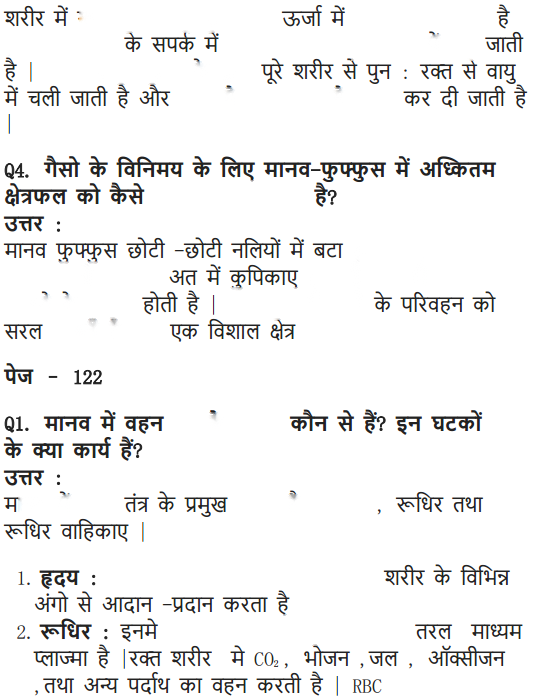
What are the components of the transport system in human beings ? What are the functions of these components ?
(i) Function of heart : The heart receives deoxygenated blood from the body parts and pumps it to lungs for enriching with oxygen. It receives purified blood from lungs and pumps it around the body.
(ii) Function of blood : Blood transports oxygen, carbon dioxide, digested food, hormones and nitrogeneous waste like urea. It also protects the body from diseases and regulates the body temperature.
(iii) Function of blood vessels : The blood pushed by the heart flows through the blood vessels (arteries, veins and capillaries) and also comes back to the heart through them.
Why is it necessary to separate oxygenated and deoxygenated blood in mammals and birds ?
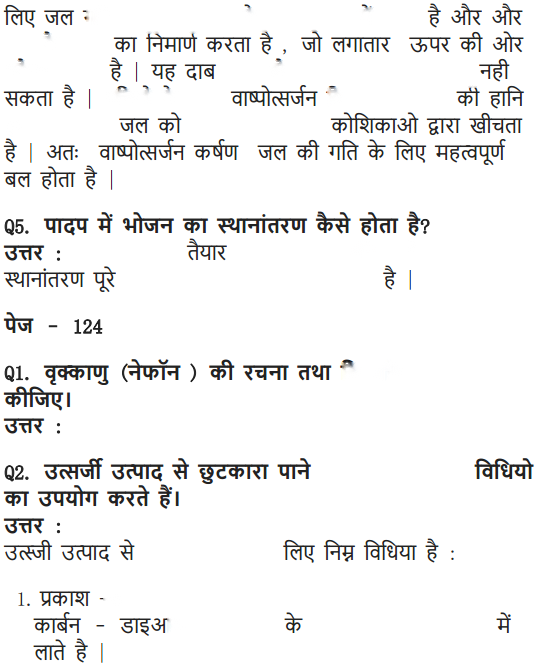
What are the components of the transport system in highly organised plants?
Xylem consists of vessels, tracheids and other xylem tissues. The interconnected vessels and tracheids form a continuous system of water conducting channels reaching all parts of the plant. Xylem carries water and minerals.
Phloem conducts soluble products of photosynthesis from leaves to different parts of the plant body.
How are water and minerals transport in plants ? [AICBSE 2015]
The root hair are directly in contact with the film of water in between the soil particles. Water and dissolved minerals get into the root hair by the process of diffusion. The water and minerals absorbed by the root hair from the soil pass from cell to cell by osmosis through the epidermis, root cortex, endodermis and reach the root xylem.
The xylem vessels of the root of the plant are connected to the xylem vessels of its stem.
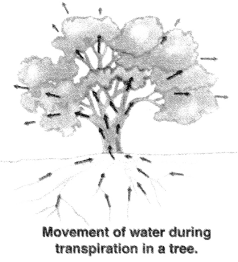
Therefore the water containing dissolved minerals enters the root xylem vessels into stem xylem vessels. The xylem vessels of the stem branch into the leaves of the plants. So, the water and minerals carried by the xylem vessels in the stem reach the leaves through the branched xylem vessels which enter from the petiole (stalk of the leaf) into each and every part of the leaf. Thus the water and minerals from the soil reach through the root and stem to the leaves of the plants. Evaporation of water molecules from the cells of a leaf creates a suction which pulls water from the xylem cells of roots. The loss of water in the form of vapour from the aerial parts of the plant is known as transpiration.
How is food transported in plants ?
Page Number: 112
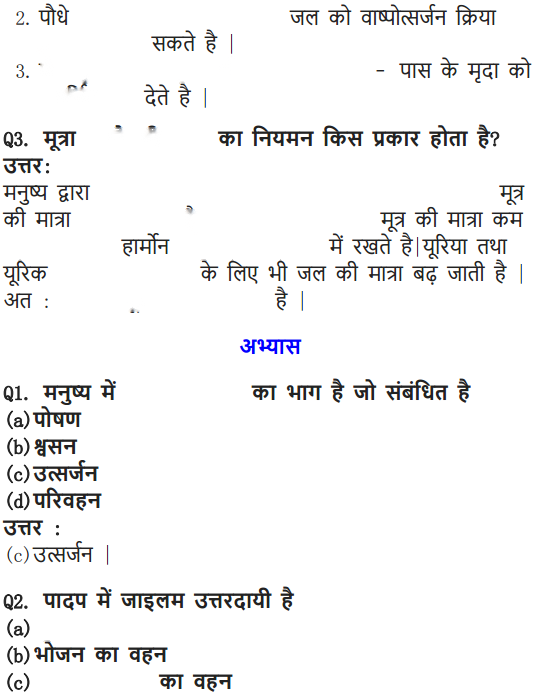
Describe the structure and functions of nephrons.
The Bowman’s capsule contains a bundle of blood capillaries which is called glomerulus. One end of the glomerulus is attached to the renal artery which brings the impure blood containing the urea waste into it. These impurities are filtered. The other part of the nephron is coiled. In this part, the substances like sugar (glucose), amino acid, ions and excess water which are required by the body, are reabsorbed. The substance remained in the nephron is mainly urine containing dissolved urea in water which is expelled from the body through urethra from time to time.
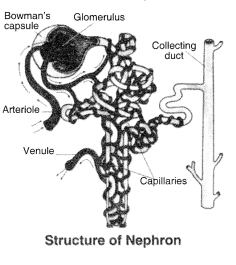
Functions of nephron : Filtration of blood takes place in Bowman’s capsule from the capillaries of glomerulus. The filtrate passes into the tubular part of the nephron. This filtrate contains glucose, amino acids, urea, uric acid, salts and water.
Reabsorption : As the filtrate flows along the tubule, useful substances such as glucose, amino acids, salts and water are selectively reabsorbed into the blood by capillaries surrounding the nephron tubule.
Urine : The filtrate which remained after reabsorption is called urine. Urine contains dissolved nitrogenous waste like urea and uric acid, excess salts and water. Urine is collected from nephrons to carry it to the ureter from where it passes into urinary bladder.
What are the methods used by plants to get rid of excretory products ?
(ii) The plants get rid of stored solid and liquid waste by the shedding off leaves, peeling off bark and felling off fruits.
(iii) The plants get rid of wastes by secreting them in the form of gums and resins.
(iv) Plants also excrete some waste substances into the soil around them.
How is the amount of urine produced regulated ?
(i) Quantity of water : When water is abundant in the body tissues, large quantities of dilute urine is excreted out. When water is less in quantity in the body tissues, a small quantity of concentrate urine is excreted.
(ii) Quantity of dissolved wastes : Dissolved wastes, especially nitrogenous wastes, like urea and uric acid and salts are excreted from the body. When there is more quantity of dissolved wastes in the body, more quantity of water is required to excrete them. Therefore, the amount of urine produced increases.
(iii) Hormones : The amount of urine produced is also regulated by certain hormones which control the movement of water and Na+ ions in and out of the nephrons.
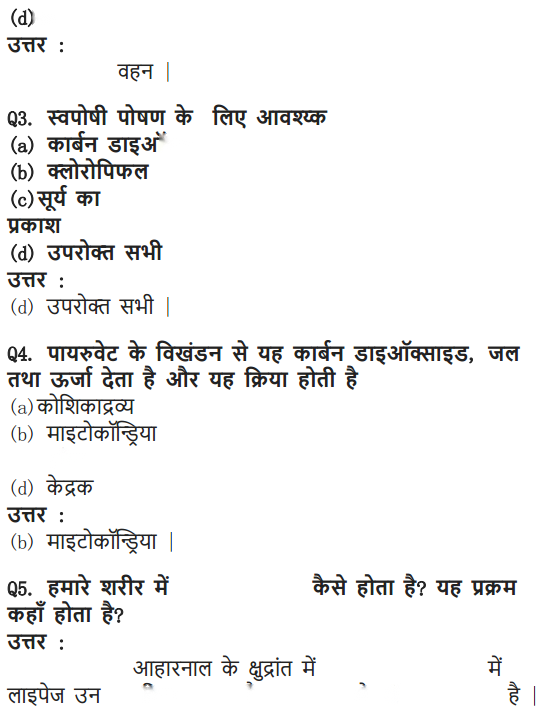
The kidneys in human beings are a part of the system for
(i) nutrition
(ii) respiration
(iii) excretion
(iv) transportation
The xylem in plants are responsible for
(i) transport of water
(ii) transport of food
(iii) transport of amino acids
(iv) transport of oxygen
The autotrophic mode of nutrition requires
(i) carbon dioxide and water
(ii) chlorophyll
(iii) sunlight
(iv) all of the above
The breakdown of pyruvate to give carbon dioxide, water and energy takes place in
(i) cytoplasm
(ii) mitochondria
(iii) chloroplast
(iv) nucleus
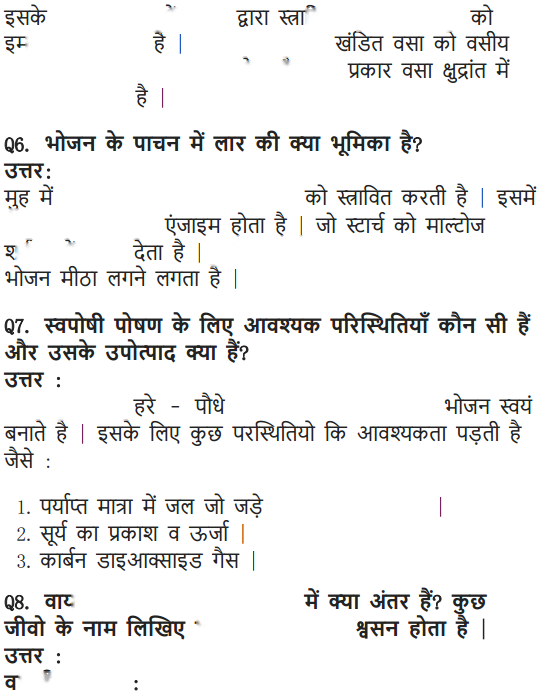
How are fats digested in our bodies ? Where does this process take place ?
Bile juice secreted by the liver poured in the intestine along with pancreatic juice. The bile salts present in the bile juice emulsify fhe large globules of fats. Therefore, by enulsification large globules break down into fine globules to provide larger surface area to act upon by the enzymes.
Lipase enzyme present in the pancreatic juice causes break down of emulsified fats. Glands present in the wall of small intestine secrete intestinal juice which contains lipase enzyme that converts fats into fatty acids and glycerol.

What is the role of saliva in the digestion of food ?
Saliva keeps the mouth cavity clean and moistens the food that help in chewing and breaking down the big pieces of food into smaller ones.

What are the necessary conditions (or autotrophic nutrition and what are its by-products ?
(i) Presence of chlorophyll in the living cells.
(if) Provision of supply of water to green plants or cells of the plant.
(iii) Sufficient sunlight.
(iv) Sufficient supply of carbon dioxide.
By-product of auto tropic nutrition is oxygen.
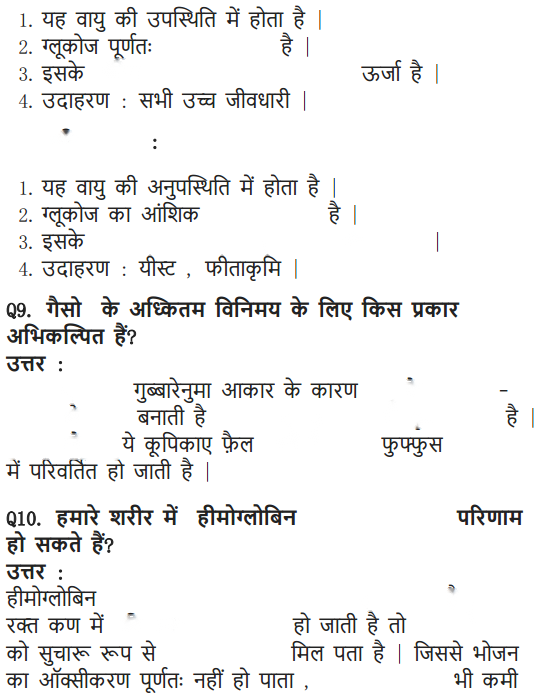
What are the differences between aerobic and anaerobic respiration ? Name some organisms that use the anaerobic mode of respiration.
Aerobic respiration | Anaerobic respiration |
Question 41 (1)
It takes place in the presence of oxygen. | 1. It takes place in the absence of oxygen. |
2. Complete breakdown of food occurs in aerobic respiration. | 2. Partial breakdown of food occurs in anaerobic respiration. |
3. The end products in aerobic respiration are carbon dioxide and water. | 3. The end products in anaerobic respiration may be ethanol and carbon dioxide (as in yeast plants) or lactic acid (as in animal muscles). |
4. Aerobic respiration produces a considerable amount of energy. | 4. Much less energy is produced in anaerobic respiration. |
Some organisms which use anaerobic respiration are yeast, bacteria etc.
How are the alveoli designed to maximise the exchange of gases ?
(ii) Alveoli have balloon-like structure. Hence, provide maximum surface for exchange of gases.
What would be the consequences of a deficiency of haemoglobin in our bodies?
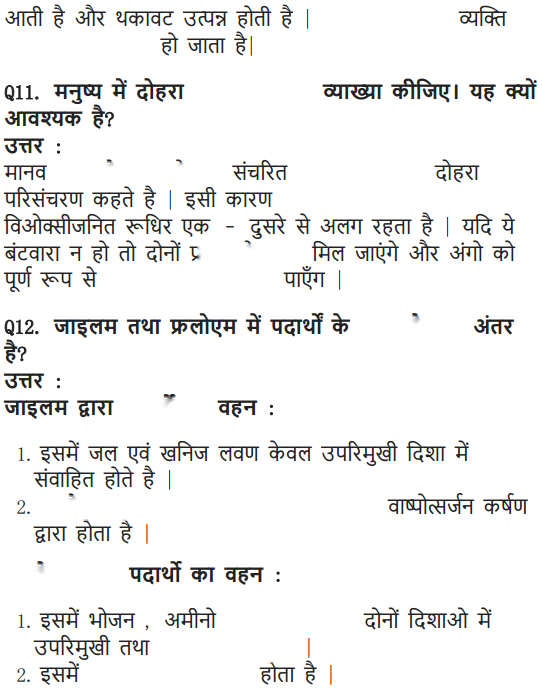
Describe double circulation in human beings. Why is it necessary ?
Necessity of double circulation:The right side and the left side of the human heart are useful to keep deoxygenated and oxygenated blood from mixing. This type of separation of oxygenated and deoxygenated blood ensures a highly efficient supply of oxygen to the body. This is useful in case of humans who constantly need energy to maintain their body temperature.
What are the differences between the transport of materials in xylem and phloem ?
Xylem | Phloem |
Question 42 (1)
Xylem conducts water and dissolved minerals from roots to leaves and other parts. | 1. Phloem conducts prepared food material from leaves to other parts of plant in dissolved form. |
2. In xylem, the transport of material takes place through vessels and tracheids which are dead tissues. | 2. In phloem, transport of material takes place through sieve tubes with the help of companion cells, which are living cells. |
3. In xylem upward movement of water and dissolved minerals is mainly achieved by transpiration pull. It is caused due to suction created by evaporation of water molecules from the cells of a leaf. | 3. In translocation, material is transferred into phloem tissue using energy from ATP. This increases the osmotic pressure that moves the material in the phloem to tissues which have less pressure |
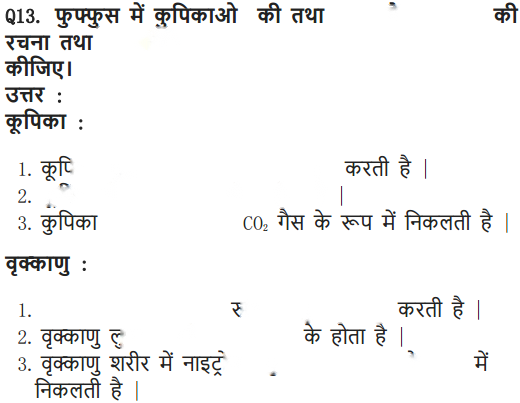
Compare the functioning of alveoli in the lungs and nephrons in the kidneys with respect to their structure and functioning.
Alveoli | Nephron |
Question 43 (1)
Alveoli are functional unit of lungs. | 1. Nephrons are functional unit of kidney. |
2. A mature lung has about 30 crore alveoli. | 2. A kidney has about 10 lakh nephrons. |
3. Alveoli provide a wide surface for gaseous exchange. | 3. The surface area of a nephron is not much more. |
4. The exchange of O2and CO2takes place through the network of capillaries in alveoli. | 4. The Bowman’s capsule in nephron regulates the concentration of water and salts. |
Life processes: ‘Living being’. Basic concept of nutrition, respiration, transport and excretion in plants and animals.
Board | CBSE |
Textbook | NCERT |
Class | Class 10 |
Subject | Science |
Chapter | Chapter 6 |
Chapter Name | Life Processes |
Number of Questions Solved | 34 |
Category | NCERT Solutions |
How are fats digested in our bodies? Where does this process take place?
What is the role of saliva in the digestion of food?
More Resources for CBSE Class 10
- NCERT Solutions
What are the necessary conditions for autotrophic nutrition and what are its byproducts?
What are the differences between aerobic and anaerobic respiration? Name some organisms that use the anaerobic mode of respiration.
How are the alveoli designed to maximise the exchange of gases?
Describe double circulation in human beings. Why is it necessary?
The adult human heart consists of two separated pumps, the right side with the right atrium and ventricle which pumps deoxygenated blood into the pulmonary circulation.
The oxygenated blood re-enters the left side of the heart through the pulmonary vein into the left atrium and passes to the left ventricle where it is pumped to the rest of the body. This part of the circulation is called as systemic circulation. This type of circulation is called double circulation. The advantage of a double circulatory system is that blood can be pumped to the rest of the body at a higher pressure.
Multiple Choice Questions (MCQs) [1 Mark each]
Yeast respires anaerobically using sugar as a substrate. Out of the options given below, choose the correct combination of condition and product?
Condition | Product | |
(a) | Aerobic | Alcohol |
(b) | Aerobic | Lactic acid |
(c) | Anaerobic | Alcohol |
(d) | Anaerobic | Lactic acid |
(c) Under an aerobic condition, yeast respires and converts glucose to alcohol and CO2.
The table shows the percentage composition of four samples of air. Which sample could have been breathed out by a person after vigorous exercise?
Samples | Oxygen | Carbondioxide | Water Vapour |
(a) | 16 | Question 44 (0)
3 | Saturated |
(b) | 16 | 4 | Saturated |
(c) | 21 | 0.03 | Trace |
(d) | 21 | 3 | Trace |
Cramps caused during sudden activities are due to the formation of
(a) lactic acid
(b) acetic acid
(c) excess of water
(d) ethanol
Answer:
(a) Lactic acid is formed by the breakdown of pyruvate when oxygen is insufficient in muscles instead of forming C02 and water. Accumulation of excess lactic acid in the muscles causes cramps.
Which of the following plays nose like function in plants?
(a) Flower
(b) Phloem
(c) Stomata
(d) Chlorophyll
Answer:
(c) Stomata are pores which help in the passage of air in the plants.
Which changes occur when a person breathe in deeply?
Diaphragm Muscle | External Intercostal Muscles | |
(a) | Contracts | Contract |
(b) | Contracts | No change |
(c) | Relaxes | Contract |
(d) | Relaxes | Relax |
(a) When a person breathes deeply the external intercostal muscles contract causing the rib cage to swing up and out. Also, the diaphragm contracts and flattens causing the thoracic cavity to increase in volume and decrease in pressure.
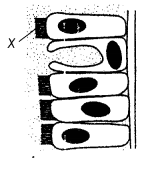
The diagram given above shows part of the lining of the human trachea. What is the function of X?
(a) Gaseous exchange
(b) Mucus removal
(c) Phagocytosis
(d) Secretion of mucus
Answer:
(b) The cilia (X) of the cells lining the air passages move in a sweeping motion to keep the air passages clean. The constant action of these cilia carry mucus and debris upward into the pharynx where they are swallowed.
The table given below shows the percentage composition of a gas in inspired and in expired air.
%Composition | |
Inspired Air | Expired Air |
Question 45 (21)
0 | 16.0 |
What is the gas?
(a) Carbon dioxide
(b) Nitrogen
(c) Oxygen
(d) Water vapour