NCERT Class 10 Social Science (Geography - Contemporary India II) Solutions
Chapter 3: Water Resources
Formulae Handbook for Class 10 Maths and Science
Water Resource NCERT Class 10 SST Geography NCERT Solutions
Question-1
Based on the information given below classify each of the situations as ‘suffering from water scarcity’ or ‘not suffering from water scarcity’ Region with high annual rainfall
Solution:
‘not suffering from water scarcity’
Question-2:
Based on the information given below classify each of the situations as ‘suffering from water scarcity’ or ‘not suffering from water scarcity’. Region having high annual rainfall and large population
Solution:
‘not suffering from water scarcity’
More Resources for CBSE Class 10
- NCERT Solutions
- RD Sharma Class 10 Solutions
Question-3
Based on the information given below classify each of the situations as ‘suffering from water scarcity’ or ‘not suffering from water scarcity’ Region having high annual rainfall but water is highly polluted.
Solution:
‘suffering from water scarcity’
Question-4.
Based on the information given below classify each of the situations as ‘suffering from water scarcity’ or ‘not suffering from water scarcity’ Region having low rainfall and low population.
Solution:
‘suffering from water scarcity’
Question-5
Which one of the following statements is not an argument in favour of multipurpose river projects?
(a) Multi-purpose projects bring water to those areas, which suffer from water scarcity.
(b) Multi-purpose projects by regulating water flow helps to control floods.
(c) Multi-purpose projects lead to large-scale displacements and loss of livelihood.
(d) Multi-purpose projects generate electricity for our industries and our homes.
Solution:
(a) Multi-purpose projects bring water to those areas, which suffer from water scarcity.
Question-6
Here is a false statement. Identify the mistakes and rewrite them correctly.
Multiplying urban centers with large and dense populations and urban lifestyles have helped in proper utilisation of water resources.
Solution:
Multiplying urban centers with large and dense populations and urban lifestyles have helped in improper utilisation of water resources.
Question-7.
Here is a false statement. Identify the mistakes and rewrite them correctly. Regulating and damming of rivers does not affect the river’s natural flow and its sediment flow.
Solution:
Regulating and damming of rivers affect the river’s natural flow and its sediment flow.
Question-8:
Here is a false statement. Identify the mistakes and rewrite them correctly.
In Gujarat, the Sabarmati basin farmers were agitated when higher priority was given to water supply in urban areas, particularly during droughts.
Solution:
In Gujarat, the Sabarmati basin farmers were not agitated when higher priority was given to water supply in urban areas, particularly during droughts.
Question-9:
Here is a false statement. Identify the mistakes and rewrite them correctly.
Today in Rajasthan, the practice of rooftop rainwater water harvesting has gained popularity despite high water availability due to the Rajasthan Canal.
Solution:
Today in Rajasthan, the practice of rooftop rainwater water harvesting has gained popularity despite low water availability due to the Rajasthan Canal.
Question-10:
Explain how water becomes a renewable resource.
Solution:
Three-fourth of the earth’s surface is covered with water, but only a small proportion of it accounts for freshwater that can be put to use. This freshwater is mainly obtained from surface run off and ground water that is continually being renewed and recharged through the hydrological cycle. All water moves within the hydrological cycle ensuring that water is a renewable resource.
The dams that were constructed to control floods have triggered floods due to sedimentation in the reservoir. Moreover, the big dams have mostly been unsuccessful in controlling floods at the time of excessive rainfall. It was also observed that the multi-purpose projects induced earthquakes, caused waterborne diseases and pests and pollution resulting from excessive use of water.
The rainwater can be stored in the tankas till the next rainfall making it an extremely reliable source of drinking water when all other sources are dried up, particularly in the summers. Rainwater, or palar pani, as commonly referred to in these parts, is considered the purest form of natural water. Many houses constructed underground rooms adjoining the ‘tanka’ to beat the summer heat as it would keep the room cool.
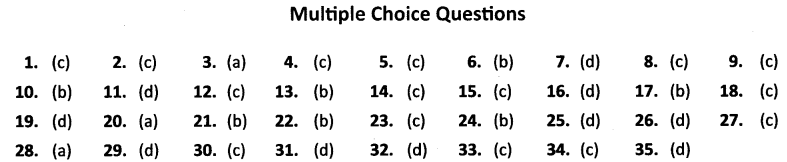
Multiple Choice Questions
Previous Years’ Questions
1. Which one of the following is not the cause of water scarcity?[CBSE (CCE) 2011]
(a) Rapid growth of population
(b) Uneven distribution of water resources
(c) Constructions of dams and reserves
(d) Increase in demand
2. Which state has made roof top rainwater harvesting structure compulsory to all the houses across the state?[CBSE (CCE) 2011]
(a) Kerala
(b) Karnataka
(c) Tamil Nadu
(d) Andhra Pradesh
3. On which of the following rivers is Koyna dam built?[CBSE (CCE) 2011]
(a) Krishna
(b) Kaveri
(c) Ganga
(d) Mahanadi
4. Nagarjuna Sagar Dam is built on which river?[CBSE (CCE) 2011]
(a) Chenab
(b) Mahanadi
(c) Krishna
(d) Satluj
NCERT Questions
5. Which of the following statements is not an argument in favour of multi-purpose river projects ?
(a) Multi-purpose projects bring water to those areas which suffer from water scarcity.
(b) Multi-purpose projects by regulating water flow help to control floods.
(c) Multi-purpose projects lead to large scale displacements and loss of livelihood.
(d) Multi-purpose projects generate electricity for our industries and our homes.
Additional Questions
6. The first multi-purpose project of India was
(a) Sivasamudram
(b) Damodar Valley
(c) Hirakud
(d) Rajasthan Canal
7. Sardar Sarovar Dam is constructed on
(a) River Krishna
(b) River Mahanadi
(c) River Kaveri
(d) River Narmada
8. Rooftop rainwater harvesting system in Rajasthan is known as
(a) Guls
(b) Tankas
(c) Johads
(d) Baolis
9. Bamboo drip irrigation is common in the state of
(a) Rajasthan
(b) Madhya Pradesh
(c) Meghalaya
(d) Karnataka
10. Water is a renewable resource because
(a) it is being recycled by human beings.
(b) it is renewed and recharged through hydrological cycle.
(c) it is being renewed through reduction.
(d) it can be reused again.
11. How much of the earth’s surface is covered by water?
(a) 1/2
(b) 2/3
(c) 1/4
(d) 3/4
12. Oceans contain ………….. volume of water.
(a) 90 percent
(b) 75 percent
(c) 96.5 percent
(d) 98 percent
13. The amount of freshwater on the earth’s surface is
(a) 1.5 percent
(b) 2.5 percent
(c) 3 percent
(d) 5 percent
14. On which river is the Bhakra Nangal Dam located ?
(a) Jhelum
(b) Chambal
(c) Satluj
(d) Chenab
15. Hirakud dam is located in which one of the following states?
(a) Andhra Pradesh
(b) West Bengal
(c) Orissa
(d) Tamil Nadu
16. Mettur Dam is located on
(a) R. Krishna
(b) R. Mahanadi
(c) R. Narmada
(d) R. Kaveri
17. Which one of the following is not a source of freshwater ?
(a) Oceans
(b) Surface run off
(c) Ice-sheets
(d) Groundwater
18. What percentage of the global precipitation is received in India ?
(a) 2 percent
(b) 5 percent
(c) 4 percent
(d) 10 percent
19. Water scarcity occurs due to
(i) low rainfall in a region
(ii) large population
(iii) over-exploitation
(iv) unequal access
(a) (i) and (ii)
(b) (ii) and (iii)
(c) (i) and (iv)
(d) All of the above
20. Water scarcity is a serious problem in recent years mainly in
(a) Cities
(b) Rural areas
(c) Deserts
(d) Mountains
21. In India hydroelectric power contributes to what percentage of the total electricity produced ?
(a) 30 percent
(b) 22 percent
(c) 20 percent
(d) 40 percent
22. We need to conserve water because
(i) it will be exhausted.
(ii) it is needed for our livelihood and other economic activities.
(iii) it will ensure food security.
(iv) there is abundance of water.
(a) (i) and (ii)
(b) (ii) and (iii)
(c) (i), (ii) and (iii)
(d) (i) and (iv)
23. The diversion channels of the Western Himalayas are called
(a) Canals
(b) Inundation channels
(c) Kuls
(d) Khadins
24. Which of the following rivers is known as the ‘River of Sorrow’ ?
(a) Hugli
(b) Damodar
(c) Narmada
(d) Kosi
25. Nagarjuna Sagar Dam is located in the state of
(a) Orissa
(b) Karnataka
(c) Kerala
(d) Andhra Pradesh
26. In which state is the Tehri Dam located ?
(a) Himachal Pradesh
(b) Punjab
(c) Uttar Pradesh
(d) Uttarakhand
27. In semi arid regions of Rajasthan the traditional system of storing drinking water in underground tanks are called
(a) Dugwells
(b) Johads
(c) Tankas
(d) None of the above
28. Which of the following Indian rivers are the most polluted ?
(a) Ganga and Yamuna
(b) Ganga and Indus
(c) Godavari and Krishna
(d) Kosi and Damodar
29. Which one of the following statements is incorrect as regards to opposition against multi-purpose projects.
(a) Regulating and damming of rivers affected the natural flow.
(b) It has caused interstate river water disputes.
(c) It has increased the social gap between the rich land owners and the landless poor.
(d) They are successful in meeting many objectives.
30. Khadins and Johads are the rain fed storage structures of which of the following states ?
(a) Karnataka
(b) Assam
(c) Rajasthan
(d) Tamil Nadu
31. Which village in Karnataka has earned a rare distinction of being rich in rain water ?
(a) Tumkur
(b) Hosur
(c) Devana halli
(d) Gendathur
32. On which of the following rivers is the Salal Project located ?
(a) Luni
(b) Satluj
(c) Jhelum
(d) Chenab
33. By 2025 how many people will live in absolute water scarcity?
(a) 1 billion
(b) 5 billion
(c) 2 billion
(d) 6 billion
34. Which one of the following options are incorrect as regards to water scarcity in cities.
(i) Cities have low population
(ii) Increased consumption
(iii) Increased food production
(iv) They receive less rainfall
(a) (i) and (ii)
(b) (ii) and (iii)
(c) (i) and (iv)
(d) (iii) and (iv)
35. Which one of the following is not the example of Hydraulic structures in Ancient India ?
(a) Bhopal Lake
(b) Lake Hauz Kauz
(c) Construction of dams, Lakes
(d) Damodar Valley Project
CBSE 2026-27 Board Exam Preparation & Practice Papers
Free Chapter Notes & Question Bank by BoardExams.in