NCERT Solutions • Class 6 English (Poorvi) |
Click here to access the bestPoorvi Unit 5 Culture and Tradition Chapter 15Ila Sachani: Embroidering Dreams With Her Feettextbook exercise questions and answers.
Ila Sachani: Embroidering Dreams With Her Feet NCERT Class 6th English Poorvi Chapter 15 Question Answer
Ila Sachani: Embroidering Dreams With Her Feet Question Answer Class 6 English
Let us do these activities before we read. (Page 151)
Question 1
|
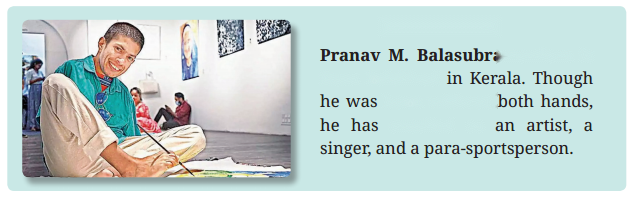
(a) Do you think Pranav’s task is simple? Why or why not?
Answer:
No, Pranav’s task is not simple. He had to face many obstacles during his life journey. Although he excels as an artist, singer, and para-sportsperson despite being born without both hands, the challenges he faces are significant. There are simple tasks that can be easily performed by any physically fit person but such tasks which are performed with hands require Pranav to develop unique methods and techniques. His achievements highlight his extraordinary determination, creativity, and resilience in overcoming physical limitations.
(b) How does Pranav’s special ability make you feel?
Answer:
Pranav’s special abilities are inspiring and awe-inspiring. They demonstrate the incredible potential of human adaptability and perseverance. His accomplishments evoke a sense of admiration and respect for his dedication and courage to excel despite significant challenges.
(c) What qualities do you think were important for Pranav to become successful?
Answer:
The qualities which are important for Pranav’s success are:
(d) What message does Pranav’s story give us?
Answer:
Pranav’s story gives us a powerful message that physical limitations do not define one’s capabilities or potential. It emphasizes the importance of resilience, innovation, and a positive attitude in overcoming challenges. His journey inspires others to pursue their dreams and not be deterred by difficulties.
Question 2
|
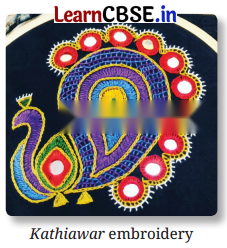
(a) List the steps you think are needed to create this embroidery.
Answer:
(b) Discuss if these steps can be done with feet, instead of hands.
Answer:
Theoretically, these steps can be done with feet, but it would require immense skill, practice, and adaptation. Using feet for intricate tasks like threading needles and precise stitching would be particularly challenging.
(c) What efforts would be needed if someone has to embroider with their feet? Do you think it is possible?
Answer:
Efforts needed would include:
While challenging, it is possible with determination, innovative approaches, and adaptive techniques. Examples like Pranav’s achievements show that individuals can accomplish remarkable feats despite physical limitations.
Let us discuss (Page 155)
Read the paragraphs and write the main idea for each. Then, match the main idea with two supporting details.
Answer:
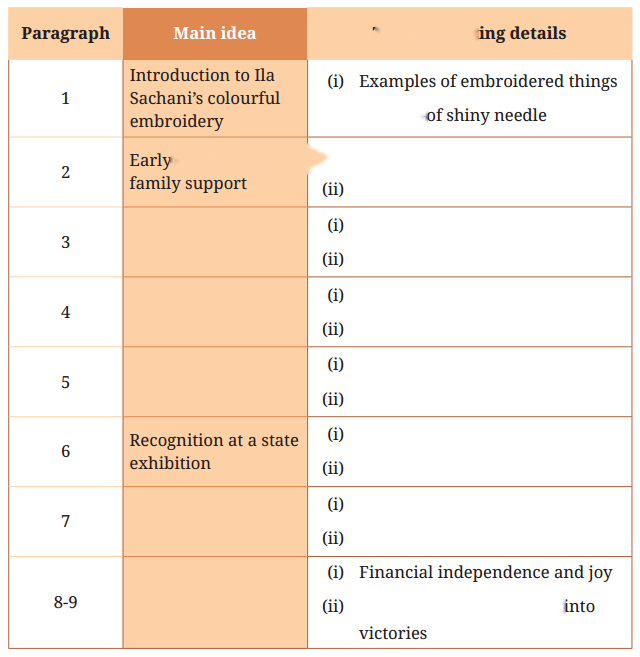
Paragraph | Main Idea | Two Supporting Details |
1 | Introduction to Ila Sachani’s colourful embroidery | (i) Examples of embroidered things |
2 | Early challenges and family support | (i) Ila struggled to balance her passion and duties |
3 | Developing embroidery style | (i) Different stitches and patterns |
4 | Selling locally | (i) Sale in local markets |
5 | Expanding Market | (i) Orders from neighboring cities |
6 | Recognition at a state exhibition | (i) Display at a state-level exhibition |
7 | Training more women | (i) Organized workshops |
8-9 | Financial Independence | (i) Financial independence and joy |
Let us think and reflect (Page 156)
Question 1
|
(a) Choose the correct option to fill in the blank.
‘Unlike other children’ means that Ila was _____________. (unaware/different/simple)
Answer:
Different
(b) What could Ila have felt when she could not join others in things they did?
Answer:
Ila felt that was why she could not play with them. She also thought to draw with chalk when others can do it.
(c) Complete the following with a suitable reason.
Ila could not draw figures on the slate because ___________.
Answer:
She was born with her hands hanging loose by her sides.
Question 2
|
Question 3
|
Question 4
|
Question 5
|
Question 6
|
Question 7
|
Let us learn (Page 156)
Question 1
|
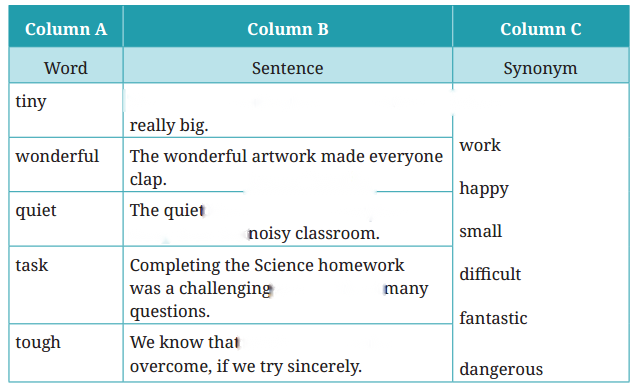
Column A | Column B | Column C | Column D |
Word | Sentence | Synonyms | Correct Synonyms |
Tiny | The garden was tiny but the park was really big. | Silent | Small |
Wonderful | The wonderful artwork made everyone clap. | Work | Fantastic |
Quiet | The quiet library was a better place to study than the noisy classroom. | happy small | Silent |
Task | Completing the Science homework was a challenging task as it had many questions. | difficult fantastic | Work |
Tough | We know that tough times can be overcome, if we try sincerely. | Dangerous | Difficult |
Question 2
|
Question 3
|
(a) The highlighted words tell us about the quantity. Choose what the words show.
(i) Unmentioned quantity
(ii) Large quantity
Answer:
The highlighted words are lots, many, many, many, many.
These words indicate a large quantity.
(b) Let us now understand what words of quantity tell us.
Fill in the blanks to complete an example for each word of quantity. Hints are given in the brackets.
Now, create two sentences for each word of quantity (i-vi), and share them with your teacher and classmates.
Answer:
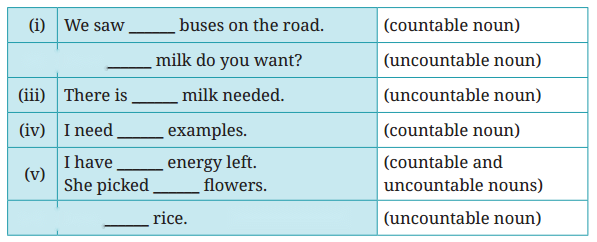
(i) | We sawtenbuses on the road. | (countable noun) |
(ii) | Howmuchmilk do you want? | (uncountable noun) |
(iii) | There ismore milkneeded. | (uncountable noun) |
(iv) | I needtwoexamples. | (countable noun) |
(v) | I havelessenergy left. She pickedmanyflowers. | (countable and uncountable noun) |
(vi) | I atemorerice. | (uncountable noun) |
Sentences for each word of quantity:
(i) Many
(ii) Much
(iii) Some
(iv) A few
(v) Little/Some
(vi) Some
Let us listen (Page 158)
Ila Sachani: Embroidering Dreams With Her Feet
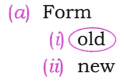
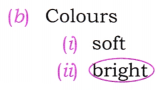
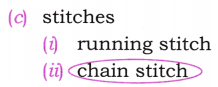
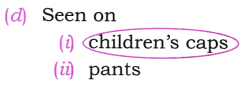
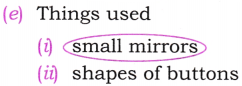
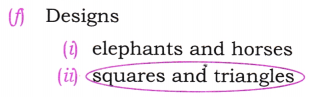
Hello everyone! I’m here today to share some simple information about Kathiawar embroidery. This is a very old form of embroidery. It uses many bright colours and also uses many types of stitches, like the chain stitch. The embroidery is commonly seen on clothes and home decoration items. On clothes, it is seen on children’s caps, ghagra skirts, and men’s traditional shirts. In this embroidery, a lot of mirror work is done by fitting small mirrors along with the stitches. Most commonly, the designs used are geometric shapes like squares and triangles. The design of flowers is also used. There is much more to share but I’ll do that some other time.
Thank you!
You will listen to the audio or narration once again. As you listen, check your answers.
You will listen to a talk about Kathiawar embroidery. As you listen, circle the correct option.
(a) Form
(i) old
(ii) new
Answer:
(b) Colours
(i) soft
(ii) bright
Answer:
(c) Stitches
(i) running stitch
(ii) chain stitch
Answer:
(d) Seen on
(i) children’s caps
(ii) pants
Answer:
(e) Things used
(i) small mirrors
(ii) shapes of buttons
Answer:
(f) Designs
(i) Elephants and horses
(ii) squares and triangles
Answer:
Let us speak (Page 159)
In pairs, write down two questions you would like to ask Ila Sachani.
(a) Look at two examples.
Where were you born?
Did you go to school?
The Yes/No questions use a rising tone at the end.
(b) Speak the example questions aloud as a peer activity at least five times.
(c) Now, take turns to ask your questions to another classmate.
Speak clearly and with the correct rising tone as shown in (a).
Answer:
(a) Here are two questions I might ask Ila Sachani:
How did you learn to use your feet for embroidery?
Did you ever feel like giving up? How did you stay motivated?
(b) This is an activity. So, do yourself in the presence of your teacher.
(c) This is an activity. So, do it yourself.
Let us explore (Page 159)
Question 1
|
Question 2
|
Question 3
|
CBSE 2026-27 Board Exam Preparation & Practice Papers
Free Chapter Notes & Question Bank by BoardExams.in