NCERT Solutions • Class 6 English (Poorvi) |
Click here to access the bestPoorvi Unit 3 Nurturing Nature Chapter 7Neem Babatextbook exercise questions and answers.
Neem Baba NCERT Class 6th English Poorvi Chapter 7 Question Answer
Neem Baba Question Answer Class 6 English
Let us do these activities before we read. (Page 75)
Question 1
|
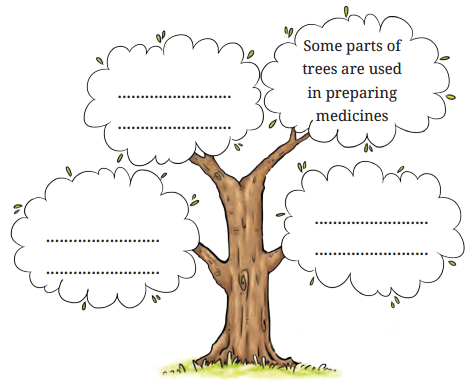
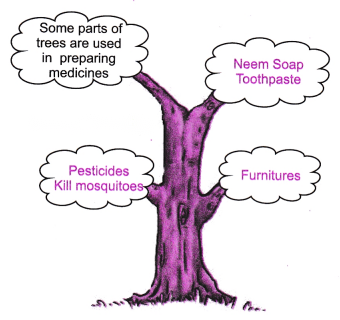
Question 2
|

Column A | Column B |
Indian tree | Height |
Bitter taste | How Large are their leaves |
Fruits sweet | Why not use as vegetables |
Medicine | More use in agriculture |
Let us discuss (Page 77)
Amber found many facts about the neem tree from Neem Baba. Fill up the fact sheet based on what Neem Baba told her.
Answer:
1. Indian tree
2. Leaves are used to protect clothes from termites. It lives for a long.
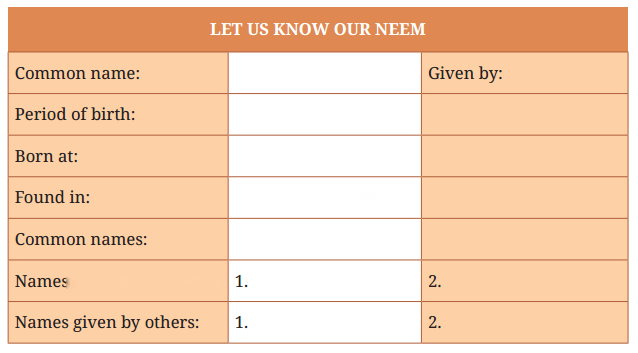
LET US KNOW OUR NEEM | ||
Common name: | Neem | Given by: Iranians |
Period of birth: | Millions of Years Ago | |
Born at: | North India Myanmar | |
Found in: | Asian, African Countries, and Parts of America | |
Common names: | Nimba, Nimbaca, Nimb, Nim, Leemba, Nimori, Nimo, Nimbe, Nimbamond | |
Names given by scientists: | Question 1 (1)
‘Bitter grace of God’ | 2. Scientists |
Names given by others: | 1. Magic tree | 2. Common People |
Let us discuss (Page 80)
Question 1
Solution:
Neem is useful to farmers as the seeds of the neem tree are powdered and mixed with water and sprayed on the crops, to drive away the termites, insects, and locusts. It also helps in controlling breeding of the mosquitoes.
|
Question 2
|
Let us think and reflect (Page 81)
Question 1
|
Question 2
|
(b) Neem seed powder protects crops from ______________________.
Answer:
Neem seed powder protects crops from termites, mosquitoes, insects and locusts.
(c) ______________________ is a cost-effctive method to stop mosquitoes from breeding in stagnant water.
Answer:
Powdered, neem seeds mixed with water spray is a cost-effective method to stop mosquitoes from breeding in stagnant water.
(d) One reason why doctors advise us to use neem leaves for someone suffring from measles is _____________________.
Answer:
One reason why doctors advise us to use neem leaves for someone suffering from measles is to kill germs and stop it from breeding and give comfort to the patient.
Question 3
|
Question 4
|
Let us learn (Page 81)
Question 1
|
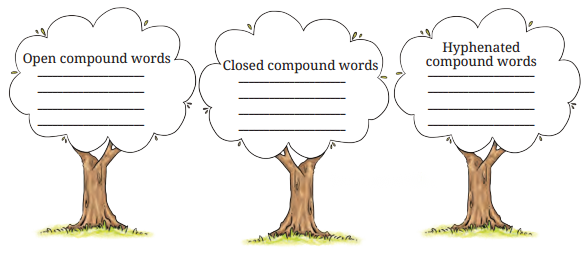
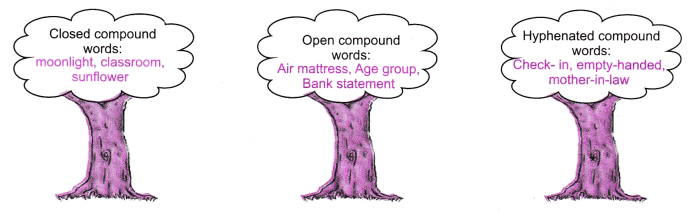
Put the compound words given above in their trees. These words are known as compound words. There are three types of compound words, based on how the words are separated.
You may add some more words:
Answer:
Question 2
|
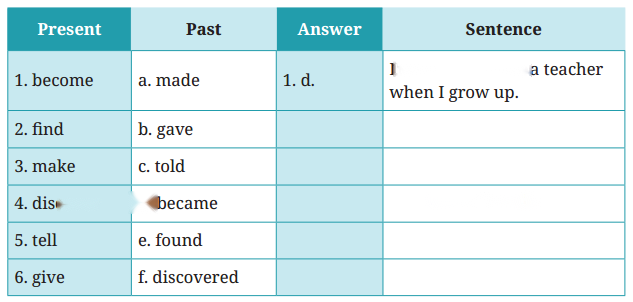
Present | Past | Solution:
| Sentence |
Question 2 (1)
become | a. made | 1. d | I want to become a teacher when I grow up. |
2. find | b. gave | 2. e | I can find my way home. |
3. make | c. told | 3. a | Make a doll for me. |
4. discover | d. became | 4. f | I can discover the way home. |
5. tell | e. found | 5. c | Don’t tell lies. |
6. give | f. discovered | 6. b | Give me my book. |
Question 3
|
Now, discuss it with your classmates and teacher.
The leaves whispered in the wind.
Here, the leaves are given the human action of whispering, which creates an image of gentle movement and a soft, rustling sound as the wind passes through them.
The flowers danced merrily in the breeze.
In this example, the flowers are described as dancing, which conveys the idea of them swaying joyfully with the gentle breeze, adding a sense of liveliness and cheerfulness to the scene.
Discussion:
Personification can make descriptions more engaging and relatable by giving life to inanimate objects or abstract concepts. It allows readers to visualize scenes more vividly and feel a stronger emotional connection to the elements of the story. When Neem Baba speaks to Amber as if he is a person, it not only makes the interaction more engaging but also imbues the neem tree with wisdom and personality, making the information shared more memorable and impactful. Personification is a powerful tool in storytelling and poetry, helping to create rich, imaginative experiences for readers.
Let us listen (Page 83)
Peepal Baba
Rahul: Maa, have you heard about Peepal Baba? Our teacher told us about him today.
Mother: I have not heard about him. Who is he and what does he do?
Rahul: He plants trees along with his team. He also started a movement to plant and save trees.
Mother: That’s wonderful. Where did he get this idea from?
Rahul: When he was studying in a school in Pune, his English teacher gave him the idea to plant trees. He was just 11 years old.
Mother: How did he plant so many trees all over the country as a child?
Rahul: He was born to an army officer’s family in Chandigarh and whenever they were moved to a new city, he planted more trees.
Mother: But how did he come to be known as Peepal Baba?
Rahul: He used to plant Peepal and Neem trees as they have many uses for us and told others to do so. So, in the beginning, people made fun of him by calling him Peepal Baba but he was not bothered and continued to do his work. Now everyone calls him by that name lovingly.
Mother: He is doing great work. We should learn from him and plant more trees.
Rahul: Yes, Maa. We must tell others to do the same.
You will listen to the audio or narration once again. As you listen, check your answers. You will now listen to a boy speaking to his mother. As you listen, select the correct statements.
(a) The mother was surprised to know that Peepal Baba had planted trees all over the country.
(b) The mother disliked the work being done by Peepal Baba.
(c) The mother wanted to know more about Peepal Baba.
(d) The boy decided to take care of trees by listening to Peepal Baba’s journey.
(e) The boy was worried about what his teacher had told him.
Answer:
The following statements are the correct statements:
(a) The mother was surprised to know that Peepal Baba had planted trees all over the country.
(c) The mother wanted to know more about Peepal Baba.
(d) The boy decided to take care of trees by listening to Peepal Baba’s journey.
These statements reflect the positive and curious attitude of both the mother and the boy towards Peepal Baba’s work and their interest in learning more about it.
Let us speak (Page 83)
Collect dry leaves of four different trees and plants around you.

Question 1
|
Question 2
|
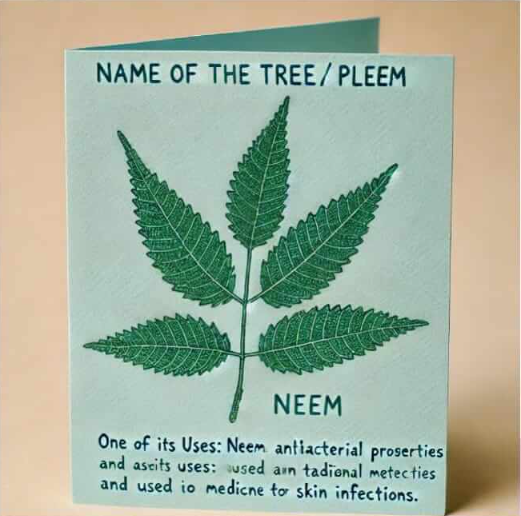
Step 1: Collecting the Leaf
First, I collected a dry leaf from the neem tree. It’s important to ensure the leaf is clean and dry before using it for our project.
Step 2: Drawing the Leaf
Next, I took a blank card and drew the shape of the neem leaf on the front. I paid close attention to its details, like the serrated edges and the veins. After outlining, I colored it to make it look as realistic as possible.
Step 3: Writing the Information
Inside the card, I wrote some important information about the neem tree. I included:
Name of the tree/plant: Neem
One of its uses: Neem leaves have antibacterial properties and are used in traditional medicine to treat skin infections.
Step 4: Final Touches
Finally, I reviewed the card to make sure everything was neat and legible. I added any additional details to enhance the presentation.
Conclusion
This project not only helped me learn more about the neem tree but also gave me the chance to practice my drawing and writing skills. It’s a fun and educational activity that I recommend to all of you. Thank you for listening!
Question 3
|
Let us write (Page 84)
You have read about Neem Baba and learned many things about the Neem tree. Look at the trees in your neighborhood and write a paragraph about any one tree that you like.
The Majestic Banyan Tree
In the bustling park near my home, there stands a majestic banyan tree. It is a colossal presence with its towering height and expansive canopy. The tree trunk is thick and gnarled, with roots that cascade down from the branches, creating a natural curtain. The leaves are broad and glossy, providing a dense cover that offers cool shade on hot days. During certain seasons, the tree blooms with small, red flowers that attract birds and insects, adding to its vibrant beauty.
I particularly like the banyan tree for its shade and the sense of tranquility it brings to the park. On many afternoons, I find solace sitting beneath its vast canopy, reading a book, or simply enjoying the peace. The tree also serves as a natural playground for children, who swing from its aerial roots and play hide-and-seek around its massive trunk. Its presence in the park is not just a source of beauty but also a testament to nature’s resilience and grandeur. The banyan tree is a symbol of shelter and comfort, offering a haven for both people and wildlife. Its timeless beauty and serene presence make it my favorite tree in the neighborhood.
Let us explore (Page 84)
When people from Persia came to India and saw that a common tree of their country was freely growing here, they started calling the tree Azad Darakhte Hindi. So, the scientific name of Neem in Latin became Azadirachta indica.
Neem has different names in the Indian languages. Discuss with your teacher and find out which Indian languages these names belong to.
Answer:

Name | Nimb | Nirn | Leemba | Nimori | Nimbamond | Nimbe | Nirno |
Indian | Hindi | Punjabi | Marathi | Gujarati | Bengali | Kannada | Tamil |