NCERT Solutions • Class 7 English (Poorvi) |
Click here to access the bestPoorvi Unit 1 Learning Together Chapter 3 Three Days to See Questions and Answers.
Three Days to See Class 7 Questions and Answers
Three Days to See Class 7 Question Answer
NCERT Class 7 English Poorvi Chapter 3 Three Days to See Question Answer
Three Days to See Question Answer – Let us do these activities before we read. (Page 28)
Work in pairs. Recall a visit to a place that you liked. Discuss the details of that place and write about the following:
Suggestive answers:
Question 1
Solution:
Qutub Minar.
|
Question 2
|
Question 3
|
II. How does this memory make you feel?
Answer:
It feels awe-inspiring and peaceful. I enjoyed learning about history while spending quality time with my family.
III. Do you think your visit/experience would be different if you could not see or hear? Share your answers with your classmates and the teacher.
Did you know that our five senses are essential for us to experience and make sense of the world around us?
Answer:
Yes, without sight, I might have relied more on touch and sound to experience the monument. Without hearing, I would have missed the fascinating stories shared by the guides.
Yes, I now understand that our five senses are must for all of us to enjoy living.
Three Days to See Class 7 Question Answer – Let us discuss (Pages 31-32)
Work in pairs. Identify the statements that are true from the ones given below. Share your answers with the teacher.
Question 1
Solution:
False:
The author expresses a deep longing to experience the world through the sense of sight, not hearing. |
Question 2
|
Question 3
|
Question 4
|
Question 5
|
Question 6
|
Question 7
|
II. Complete the table given below with what Helen Keller wanted to do on the three days if she had sight.
Answer:
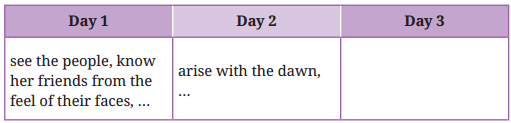
Day 1 | Day 2 | Day 3 |
See the people, know her friends from the feel of their faces, whose kindness and companionship have enriched her life. | Arise with the dawn; observe the transformation of night into day; visit museums to see Earth’s history and man’s progress. | Observe people in their daily lives; understand their experiences by sight; explore the workaday world. |
III. The author says that you need eyes to be able to ‘see’ the true self of a person. Therefore, she refers to the eye as ‘window of the soul’. How is the narrator able to understand the feelings of a person?
Answer:
The narrator, though unable to see, understands the feelings of a person through her sense of touch. By gently tracing the contours of a person’s face, she can detect emotions like joy, sadness, or worry. This tactile connection allows her to interpret expressions and form meaningful insights about others. Her sensitivity and heightened awareness enable her to connect deeply, demonstrating that understanding goes beyond visual perception.
Class 7 English Three Days to See Question Answer – Let us think and reflect (Pages 32-33)
Read the extracts given below and answer the questions that follow.
Question 1
Solution:
The delicate symmetry of a leaf symbolises harmony, balance and the intricate beauty of nature.
|
(ii) List two phrases from the extract that describe the texture of objects in nature.
Answer:
The textures of objects in nature are described as:
(iii) Complete the sentence appropriately.
The phrase ‘awakening Nature after her winter’s sleep’ refers to _________.
Answer:
The phrase refers to the arrival of spring, when nature comes back to life after the cold period of winter.
(iv) What is the tone of the writer in this extract?
A. nostalgic
B. proud
C. admiring
D. celebratory
Answer:
The tone of the writer is “admiring”.
Question 2
|
(ii) Why does the writer refer to the earth as ‘sleeping earth’?
Answer:
The writer refers to the earth as “sleeping earth” to symbolise the state of rest and inactivity before dawn transforms it into life and activity.
(iii) Complete the sentence with an appropriate reason.
The writer wishes to dedicate the day to a brief look at the present and past world because _________.
Answer:
The writer wishes to dedicate the day to a brief look at the present and past world because it gives her a chance to witness the progress of humanity and the history of the earth.
(iv) Why does the writer use ‘should’ multiple times in the extract?
Answer:
The writer uses “should” multiple times in the extract to express intent, possibility and a sense of ideal action.
II. Answer the following questions.
Question 1
|
Question 2
|
Question 3
|
Question 4
|
Question 5
|
Question 6
|
Three Days to See Class 7 Questions and Answers – Let us learn (Pages 34-35)
Sensory words are descriptive — they describe how we experience the world: how we see, hear, smell, taste or feel something.
Complete the following table with sensory words from the text in Column 2 for the five senses in Column 1. Add new words in Column 3.
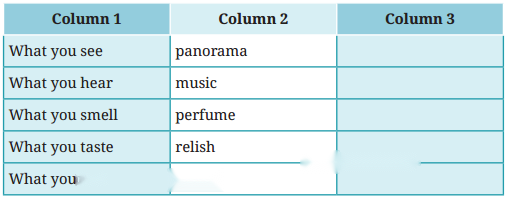
Column 1 | Column 2 | Column 3 |
What you see | Panorama | vibrant, radiant |
What you hear | Music | harmonic, echoing |
What you smell | Perfume | fragrant, zesty |
What you taste | Relish | sweet, tangy |
What you feel | Rough | silky, prickly |
II. Read the following sentences from the text and underline the verbs.
The words you have underlined are a combination of two verbs. In each of these sentences, ‘should’ is the modal verb (suggestion), and the second verb (divide, want, arise, behold) is the main verb.
Modal verbs are helping (auxiliary) verbs that express the mood, possibility, necessity, ability, permission or obligation of the main verb.
They are used with the base form of the main verb (without ‘to’).
Some common modal verbs are: can (abili-ty/permission), could (polite request), may (permission/possibility), might (possibility), shall (suggestion/future), should (advice/ obligation), will (future/promise), must (necessity/strong obligation).
Answer:
The underlined verbs are a combination of two verbs. In all the above sentences ‘should’ is the modal verb (suggestion), and the second verb (divide, want, arrive and behold) is the second verb.
GOLDEN GRAMMAR TIPS
Modal verbs are helping (auxiliary) verbs that express the mood, possibility, necessity, ability, permission or obligation of the main verb.
They are used with the base form of the main verb (without ‘to’).
Some common modal verbs are: can (ability/permission), could (polite request), may (permission / possibility), might (possibility), shall (suggestion / future), should (advice / obligation), will (future / promise), must (necessity/strong obligation).
III. Identify the modal verbs in the following sentences. Choose the functions they express from those given in the box below.
1. Youcanlearn a lot from this experience.
2. Theymightarrive late due to traffic.
3. Shemustfinish her homework before dinner.
4. Theyoughtto apologise for their mistake.
5. Hewouldlike to have some lassi, please.
Answer:
The functions they express are:
1. can – Ability
2. might – Possibility
3. must – Necessity
4. ought – Moral obligation
5. would – Polite request

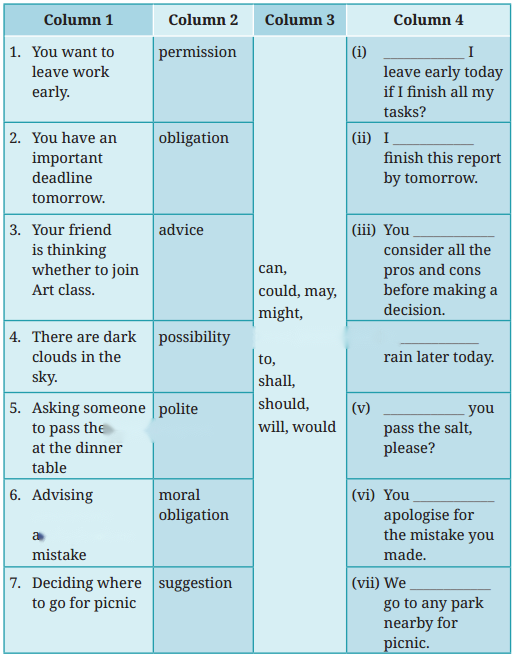
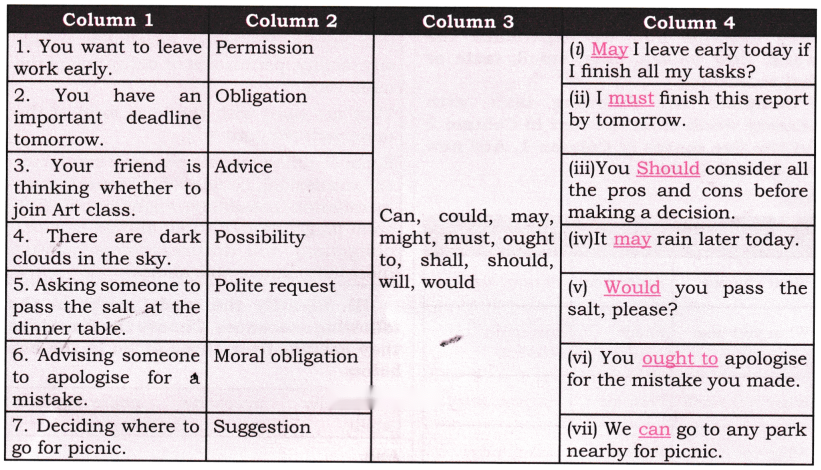
IV. Read the situations in Column 1 and functions in Column 2. Fill in the blanks in the sentences in Column 4 with appropriate modal verbs from Column 3. After filling in the blanks, explain the function of each modal verb you used to your classmates and the teacher.
Answer:
Explanation:
1. May: It is used to show permission.
2. Must: It is used to show obligation.
3. Should: It is used to show advice or recommendation.
4. May: It is also used to show a higher degree of possibility.
5. Would: It is used to do polite requests.
6. Ought to: It is used to show strong advice.
7. Can: It is used to show ability.
Three Days to See Question Answer Class 7 – Let us listen (Page 36)
You will listen to a conversation between a mother and son. As you listen, select four true statements from 1-7 given below. (Transcript for the teacher on NCERT textbook page. 41)
table-3
Answer:
1. → True – Reason: Because Anuj wants to know what is screen reader in computers and how they help blind people.
2. → False – Reason: Because mother is sure that the school has facilities to address the needs of the visually impaired.
3. → True – Reason: Because he said that Digital India is about being computer literate.
4. → True – Reason: Because mother explains Anuj what are assistive technologies.
5. → False – Reason: Because Anuj was unaware that visually impaired can use computers. His mother told him about that.
6. → False – Reason: Because her mother tells him what are assistive technologies when Anuj wanted to know about Digital India.
7. → True – Reason: Because the mother believes that computers can improve the quality of life of visually impaired.
Class 7 English Chapter 3 Question Answer – Let us Speak (Pages 36-37)
Work in pairs. Take turns to speak for a minute on any one of the senses you value the most. Use the given prompts to frame your response before you speak.
Remember to
I value my sense of sight the most because it allows me to see the beauty of the world around me—the colours of flowers, the sparkle of sunlight on water, and the smiles of the people I love. One of my favourite experiences is watching the sunrise from a hilltop. This is so because the sky turns into a masterpiece of orange, pink, and gold, making me feel calm and hopeful. I appreciate being able to see the faces of my family and friends, their expressions telling me how they feel without needing words. God forbid, if I were to lose the sense of sight, it would make me feel scared and limited, as I wouldn’t be able to enjoy books, paintings, or the beauty of nature. I would not be able to see my surroundings and would need to rely more on other senses. I thank God that I am able to see the wonderful things life offers and cherish every moment I can see them.
NCERT Class 7 English Poorvi Chapter 3 Question Answer – Let us write (Page 37)
A descriptive paragraph describes a person, place, object or event to create a memorable experience for the reader. Write a descriptive paragraph describing a place that you visited recently.
Follow the guidelines given below to draft this paragraph.
1. In the opening line, begin with something interesting to capture the reader’s attention. Introduce the place you visited.
2. In the supporting lines, describe the place using adjectives and specific details that appealed to your five senses—sight, sound, smell, taste, and touch. You may include alliterations, similes, and personifications to hold the reader’s attention.
3. In the concluding lines, summarise the description to provide a final impression. Mention what was the most important thing about that place which others should also experience.
Answer:
During my last vacation, I visited a beautiful hill station. The tall green pine trees were everywhere, gently moving with the wind as if they were talking to each other. The fresh air smelled of pine and wildflowers, which made me feel calm and happy. I could hear the soft sound of a small stream flowing nearby and birds chirping from the trees. The warm sun touched my skin, and the stone path felt cool under my feet. At a little cafe, I tried buttery croissants that were so delicious and soft they seemed to melt in my mouth. As the day ended, I stood on a hill and watched the sunset spread colours like red, orange, and pink across the sky. It was peaceful and magical, and I felt relaxed.
The best part about hill station is hoW quiet and calm it is. It’s the perfect place for anyone who wants to feel close to nature and leave behind the noise of the city.
Class 7th English Chapter 3 Day the River Spoke Question Answer – Let us Explore (Pages 37-38)
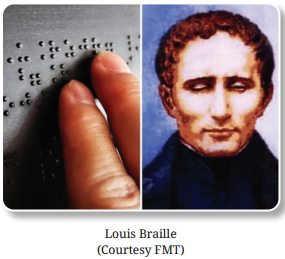
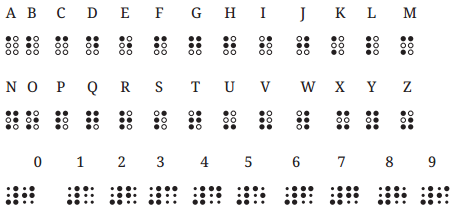
Do you know how persons with visual challenges are able to read and write? They read through touch with the help of Braille, a code of raised dots that represents the letters of the alphabet. This tactile code was developed over a period of nine years by Louis Braille, who became blind at a very young age due to an accident.
II. Have you heard about the International Day of Persons with Disabilities? Find out when and how it is observed in India. Write your findings on a sheet and put it up on the class board.
Answer:
The International Day of Persons with Disabilities (IDPD) is observed every year on December 3rd to promote awareness and support for the rights and inclusion of persons with disabilities. In India, the day is marked by initiatives like the Accessible India Campaign to improve accessibility in public spaces and systems, as well as programs such as the Deendayal Divyangjan Rehabilitation Scheme focused on rehabilitation and creating opportunities. The day emphasises fostering inclusivity and celebrating the contributions of persons with disabilities.
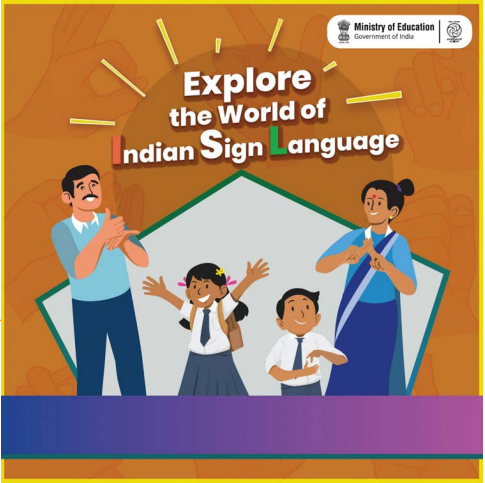
III. Do you want to know about sign language? Go to the link given below to learn about the Indian sign language.
accessibility/ISL 200wordvl 5.pdf
Answer:
Students to follow instructions given in the question and do themselves.
CBSE 2026-27 Board Exam Preparation & Practice Papers
Free Chapter Notes & Question Bank by BoardExams.in