NCERT Solutions • Class 7 Science (Curiosity) |
Chapter-wiseChapter 2 Exploring Substances Acidic Basic and Neutral Class 7 Questions and Answers are useful for focused study.
Class 7 Science Chapter 2 Exploring Substances Acidic Basic and Neutral Question Answer
Science Class 7 Chapter 2 Question Answer Exploring Substances Acidic Basic and Neutral
Exploring Substances Acidic Basic and Neutral Class 7 Question Answer (InText)
Question 1
|
Question 2
|
Question 3
|
Question 4
|
Question 5
|
Question 6
|
Question 7
|
NCERT Class 7 Science Chapter 2 Question Answer Exploring Substances Acidic Basic and Neutral (Exercise)
Let Us Enhance Our Learning
Question 1
|
Question 2
|
Question 3
|
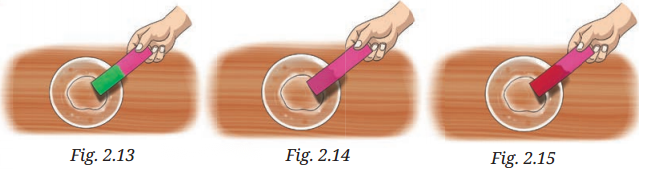
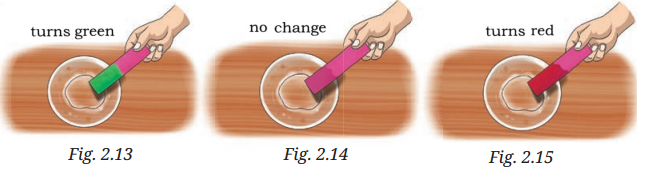
Question 4
|
Indicator | Red litmus | Blue litmus | Turmeric |
Change | No change | Turned red | No change in colour |
The given liquid sample is acidic in nature. It does not affect red litmus paper, but it turns blue litmus paper red, which is an indication of acidic nature. Also, there is no change in the turmeric indicator, confirming its acidic nature.
Question 5
|
Question 6
|
Writing Material | Substance in Spray Bottle | Colour of Writing (on paper) |
Lemon juice | Blue litmus solution | Red |
Baking soda solution | Red litmus solution | Blue |
Baking soda solution | Rose extract | Green |
Vinegar | Rose extract | Red |
Soap solution | Turmeric solution | Red |
Amla juice | Indian blackberry juice | Pink |
Lime water | Indian blackberry juice | Purple |
Grapes juice | Beetroot extract | Red |
Washing powder solution | Beetroot extract | Blue |
Tamarind water | Red hibiscus extract | Pink |
Soap solution | Red hibiscus extract | Green |
Question 7
|
Question 8
|
Question 9
|
The resulting liquid is a natural indicator that turns red in acids and green in bases.
Question 10
|
Question 11
|
Question 12
|
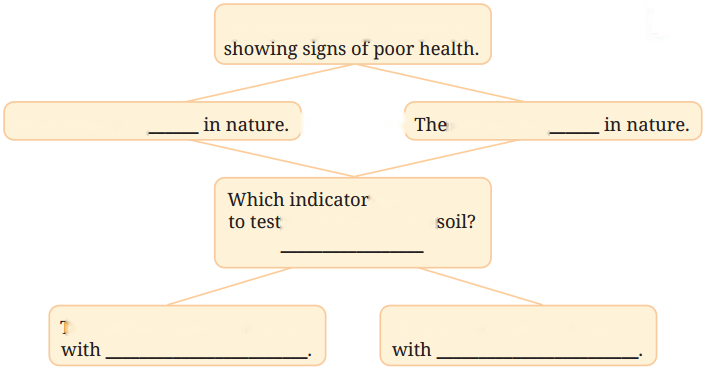
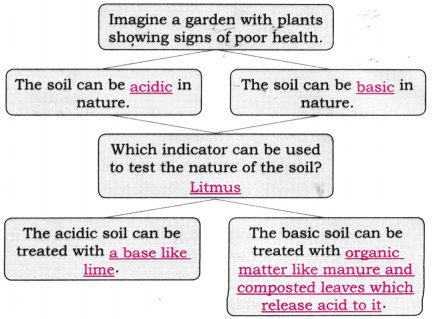
Class 7 Exploring Substances Acidic Basic and Neutral Question Answer (Activities)
Activity 2.1: Let Us Explore (Page 8-9)
Table 2.1: Testing the nature of samples with blue and red litmus papers
Name of the Sample | Colour of blue litmus paper after putting a drop of sample | Colour of red litmus paper after putting a drop of sample |
Lemon juice | Red | Red |
Soap solution | Blue | Blue |
Amla juice | Red | Red |
Tamarind water | Red | Red |
Vinegar | Red | Red |
Baking soda solution | Blue | Blue |
Lime water | Blue | Blue |
Tap water | Blue | Red |
Washing powder solution | Blue | Blue |
Sugar solution | Blue | Red |
Salt solution | Blue | Red |
Orange juice | Red | Red |
Table 2.2: Grouping of samples tested in Table 2.1
Group A | Group B | Group C |
Lemon juice, Amla juice, Tamarind water, Vinegar, Orange juice | Soap solution, Baking soda solution, Lime water, Washing powder solution | Tap water, Sugar solution, Salt solution |
Observation and conclusion: Substances in Group A, like lemon juice and vinegar, are acidic as they turn blue litmus paper red. Group B substances, like soap and baking soda, are basic as they turn red litmus paper blue. Group C substances, like tap water and sugar solution, are neutral because they do not change the litmus paper colour.
Activity 2.2: Let Us Relate and explore (Page 11)
All the substances in Group A – lemon juice, amla juice, tamarind water, vinegar and orange juice are edible. They all have a sour taste because they contain acids and are acidic in nature. The common acids found in these substances are:
Activity 2.3: Let Us Prepare (Page 12)
Do it yourself.
Activity 2.4: Let Us Find out (Pages 12-13)
Table 2.3: Testing the nature of samples with red rose extract
Name of the Sample | The colour of the red rose extract after adding the sample | Nature of substance |
Lemon juice | Red | Acidic |
Soap solution | Green | Basic |
Amla juice | Red | Acidic |
Baking soda solution | Green | Basic |
Vinegar | Red | Acidic |
Observation and conclusion: The rose extract gives a red colour in an acidic solution and a green colour in a basic solution.
Activity 2.5: Let Us Prepare (Pages 14-15)
Table 2.4: Testing the nature of samples with turmeric paper
Name of the Sample | The colour of the turmeric paper after putting a drop of sample |
Lemon juice | Yellow |
Soap solution | Red |
Amla juice | Yellow |
Baking, soda solution | Red |
Sugar solution | Yellow |
Observation and conclusion: Turmeric paper changes colour from yellow to red in a basic solution but shows no change in acidic or neutral solutions.
Activity 2.6: Let Us Lnvestigate (Page 16)
Do it yourself.
Activity 2.7: Let Us Experiment (Page 17)
Do it yourself.
CBSE 2026-27 Board Exam Preparation & Practice Papers
Free Chapter Notes & Question Bank by BoardExams.in