NCERT Solutions • Class 6 Mathematics (Ganita Prakash) |
Get the simplifiedClass 6 Maths NCERT Solutionsof Ganita Prakash Chapter 2 Lines and Angles textbook exercise questions with complete explanation.
Ganita Prakash Class 6 Maths Chapter 2 Solutions Lines and Angles
1 Point 2.2 Line Segment 2.3 Line 2.4 Ray Figure it Out (Page No. 15-17)
Question 1
Solution:
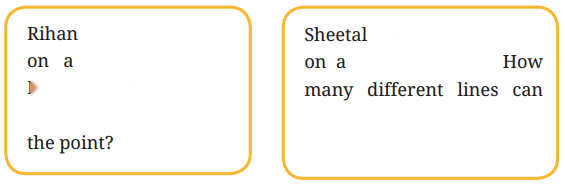
Rihan can draw infinite number of lines that pass through the point.
Whereas Sheetal can draw only one line that passes through both of the points. |
Question 2
|
Question 3
|
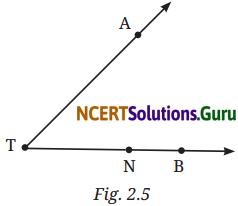
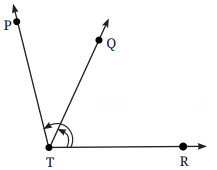
Yes, T is the starting point of both of these rays. In geometry, the starting point of a ray is called the ‘initial point’, and here, T serves as the initial point for both ray and ray .
Question 4
|
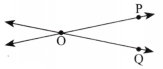
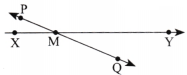
(b) XY and PQ intersect at point M.
Solution:
(c) Line l contains joints E and F but not point D.
Solution:

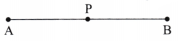
(d) Point P lies on AB.
Solution:
Question 5
|
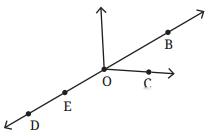
Question 6
|
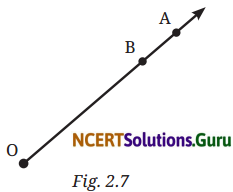
(b) No, you cannot write as . The notation represents a ray that starts at O and passes through A, extending infinitely in the direction from O to A. In contrast, would represent a ray starting at A and passing through O. The direction and starting point are different for , so it does not represent the same ray as .
5 Angle Figure it Out (Page No. 19-21)
Question 1
Solution:
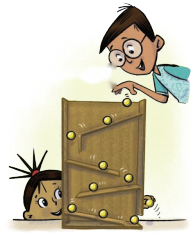
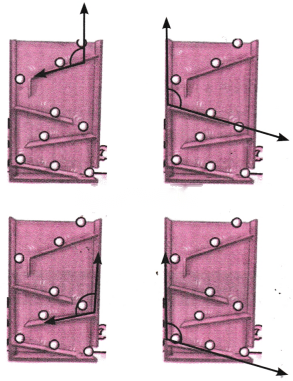
Yes, we can find the angles in the given pictures.
|
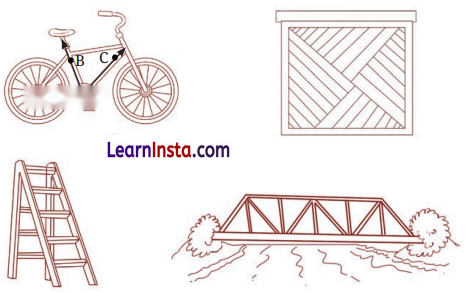
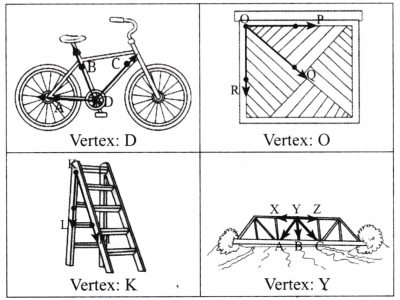
Question 2
|
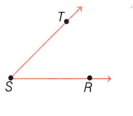
Question 3
|
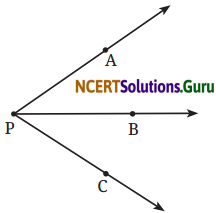
So, to make it clear, we use all three letters: A, P, and C, to describe the exact angle we mean.
Question 4
|
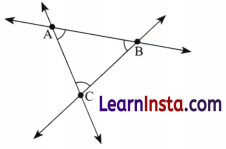
Question 5
|
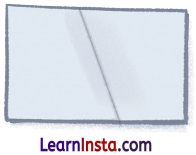
Question 6
|
6 Comparing Angles Figure it Out (Page No. 23)
Question 1
Solution:
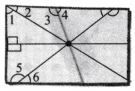
Do it yourself. For your reference, ∠5 is the largest and ∠2 is the smallest among all the angles in the figure shown below. |
Question 2
|
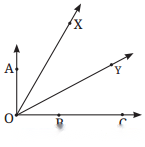
Question 3
|
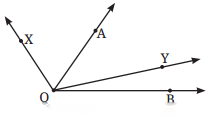
7 Making Rotating Arms 2.8 Special Types of Angles Figure it Out (Page No. 29-31)
Question 1
Solution:
Do it yourself.
|
Question 2
|
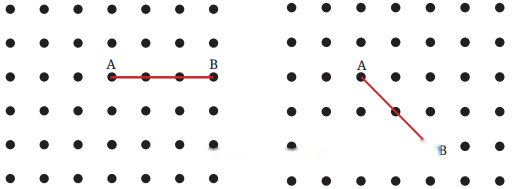
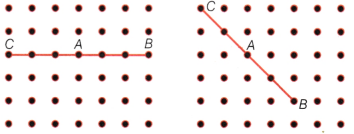
Question 3
|
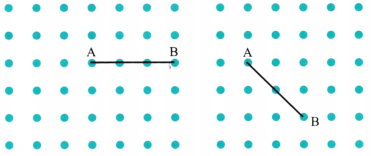
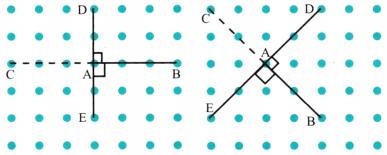
Question 4
|
7 Making Rotating Arms 2.8 Special Types of Angles Figure it Out (Page No. 31-32)
Question 1
Solution:
|
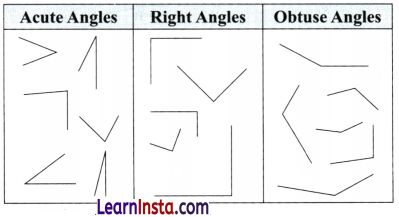
Question 2
|
Question 3
|
Question 4
|
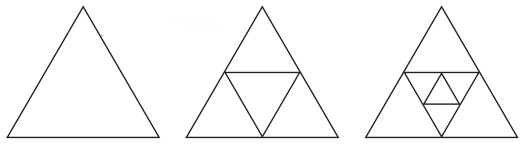
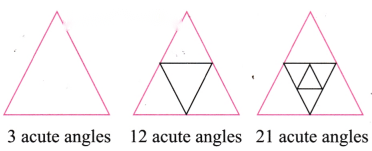
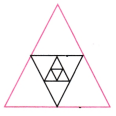
Next figure will be as follows:
Number of acute angles = 21 + 9 = 30
9 Measuring Angles Figure it Out (Page No. 35)
Question 1
Solution:
(a) Yes it is possible to count the number of units in 5s or 10s because there are also marking for each 5° and 10° on the protractor and the arms and pass through the 10° markings.
|
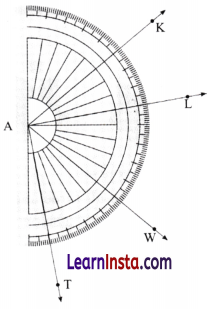
(b) In the given figure, the arms and pass through the 10° markings. There are five 10° markings of scale where and pass. So, ∠WAL = 50°.
(c) In the given figure, the arms and pass through the 10° markings. There are twelve 10° markings of scale where and pass. So, ∠TAK = 120°.
9 Measuring Angles Figure it Out (Page No. 40-43)
Question 1
Solution:
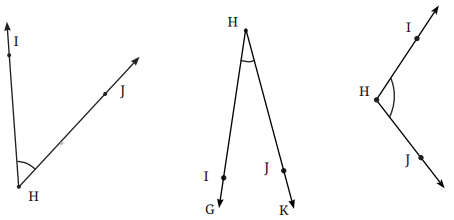
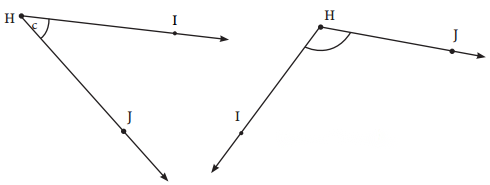
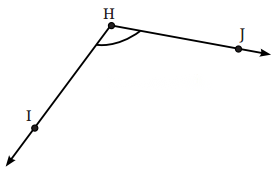
(a) ∠IHJ = 47°
(b) ∠IHJ = 24° (c) ∠IHJ =110° |
Question 2
|
Question 3
|
Question 4
|
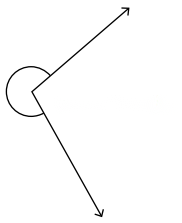
Question 5
|
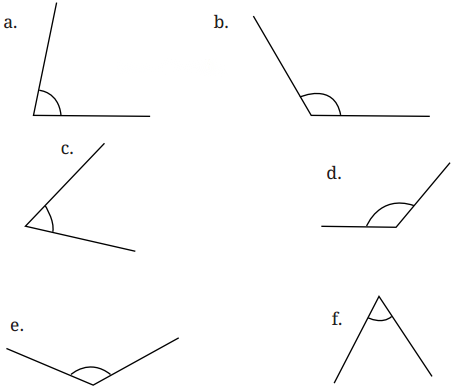
Question 6
|
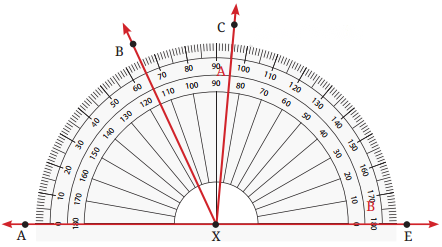
Question 7
|
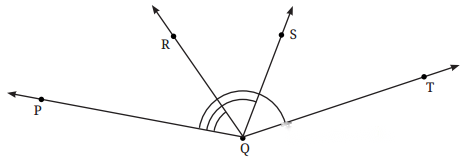
Question 8
|
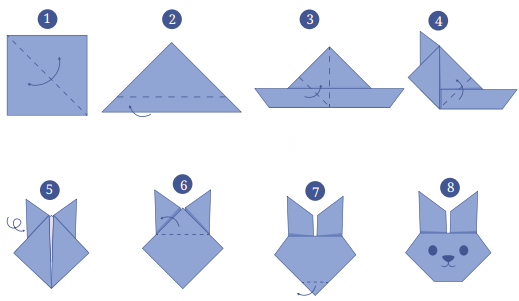
Question 9
|
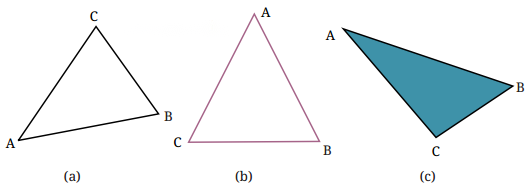
9 Measuring Angles Figure it Out (Page No. 45-46)
Question 1
Solution:
(a) The clock is divided into 12 h, so each hour mark is 30° apart (360°- 12 = 30°).
Therefore, at 1 O’clock the hour hand is at 1 and the minute hand is at 12, forming a 30° angle. |
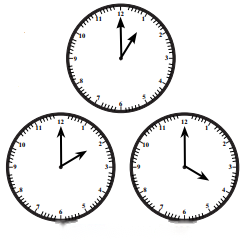
(b) At 2 O’clock, it is 60° (i.e. 30° × 2 = 60°), at 4 O’clock, it is 120° (i.e. 30° × 4 = 120°) and at 6 O’clock, it is 180° (i.e. 30° × 6 = 180°)
(c) The angle increases by 30° for each hour. Other angle includes 90° at 3 O’clock, 150° at 5 O’clock and so on. Thus, on multiplying the hour by 30°, we can find the angle at any hour.
Question 2
|
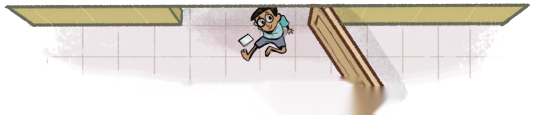
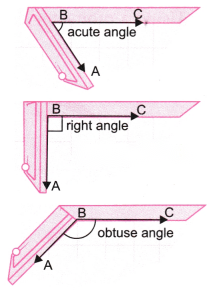
Yes, it is possible.
Here, vertex is B, and arms are AB and BC.
Question 3
|
Question 4
|
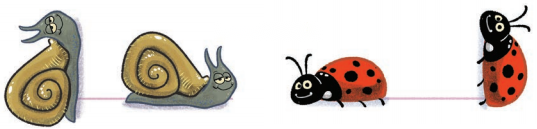
Question 5
|
10 Drawing Angles Figure it Out (Page No. 49-50)
Question 1
Solution:
|
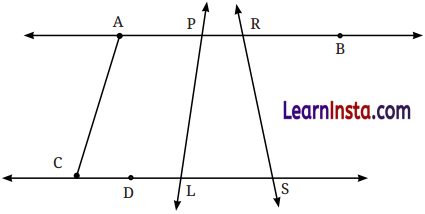
Name of Angles | Estimated measure of Angles | Actual measures of Angles |
∠PAC | 100° | 107° |
∠ACD | 80° | 72° |
∠CDL | 180° | 180° |
∠DLP | 95° | 97° |
∠LPR | 95° | 98° |
∠PLS | 85° | 82° |
∠LSR | 75° | 78° |
∠PRS | 105° | 102° |
∠BRS | 75° | 79° |
Question 2
|

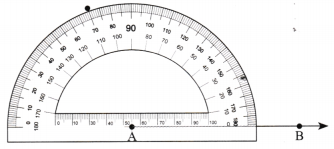
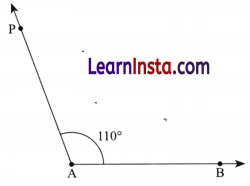
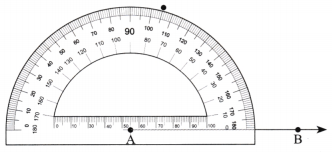
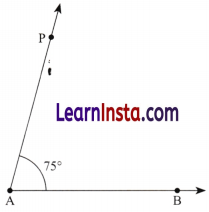
(c) We can construct an angle of measure 75° using a protractor step by step as discussed below.
Step I: Draw a ray .
Step II: Place the centre of the protractor at A and the zero edge along .
Step III: Start counting from zero near B. Mark a point P at 75°.
Step IV: Join AP.
Thus, ∠BAP = 75°.
(b), (d) and (e). Do it yourself as done above.

Question 3
|
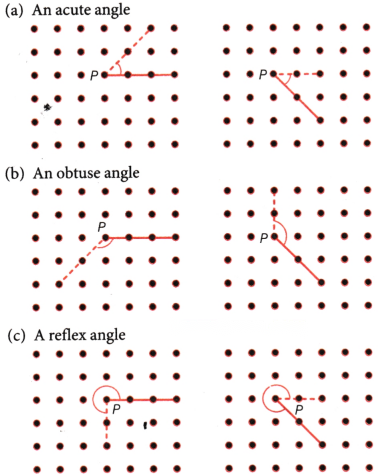
11 Types of Angles and their Measures Figure it Out (Page No. 51-52)
Question 1
Solution:
|
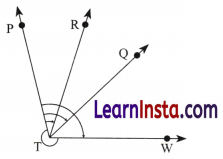
Question 2
|
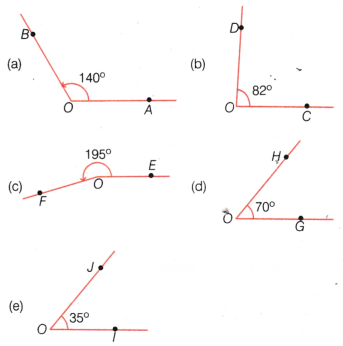
11 Types of Angles and their Measures Figure it Out (Page No. 53-54)
Question 1
Solution:
|
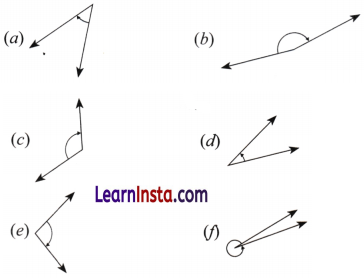
Question 2
|

Question 3
|
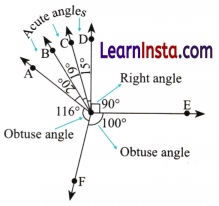
Question 4
|
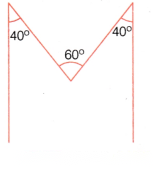
Question 5
|
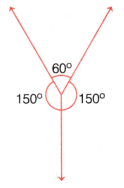
Question 6
|

Largest Acute Angle Formed Between Two Spokes:
Question 7
|
CBSE 2026-27 Board Exam Preparation & Practice Papers
Free Chapter Notes & Question Bank by BoardExams.in