NCERT Solutions • Class 6 Mathematics (Ganita Prakash) |
Get the simplifiedClass 6 Maths NCERT Solutionsof Ganita Prakash Chapter 8 Playing with Constructions textbook exercise questions with complete explanations.
Ganita Prakash Class 6 Maths Chapter 8 Solutions Playing with Constructions
1 Artwork Construct (Page No. 190 – 191)
Question 1
Solution:
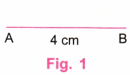
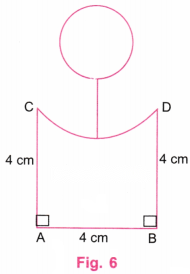
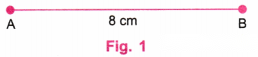
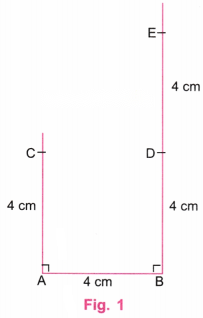
Step 1. We start with the base of the diagram. We take a line AB of length 4 cm as the base. (Fig. 1)
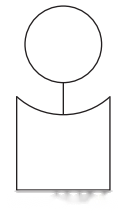
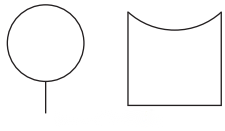
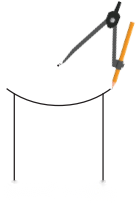
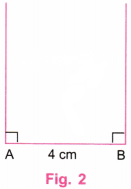
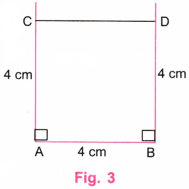
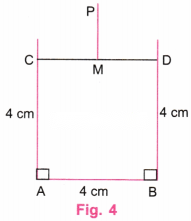
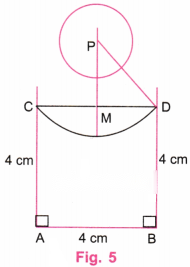
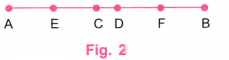
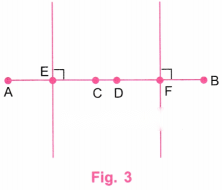
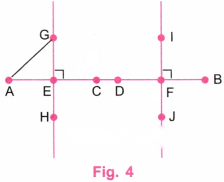
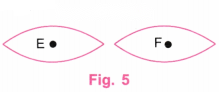
Step 2. At A and B, draw perpendicular lines using a protractor. (Fig. 2) Step 3. Using a ruler, mark points C and D such that AC = 4 cm and BD = 4 cm. Join C and D by a line. (Fig. 3) Step 4. Using a ruler, take point M on the CD such that CM = 2 cm. M is the midpoint of CD. Using a protractor, draw a perpendicular to CD at M. Take a point P on this perpendicular such that PM = 2 cm. Distance PM can also be slightly less than or greater than 2 cm. (Fig. 4) Step 5. Join PD. With centre at P, draw an arc from D to C of a radius equal to PD. With centre at P, draw a circle of radius 1.5 cm. Extend PM to touch the arc. (Fig. 5) Step 6. Erase the extra lines in Fig. 5 as in Fig. 6. Step 7. Fig. 6 represents the required depiction of the given “A person”. |
Question 2
|
Question 3
|


1 Artwork Figure it Out (Page 191)
Question 1
Solution:
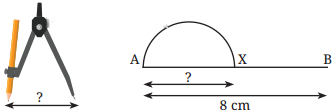
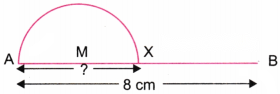
We have AB = 8 cm.
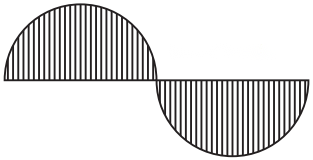
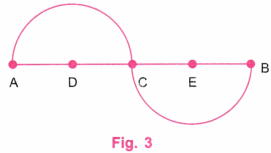
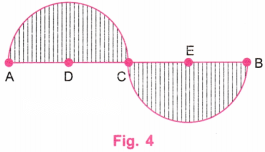
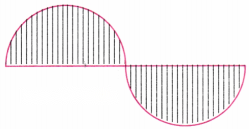
Since the “Wavy Wave” has two equal half circles, we have AX = XB. ∴ X is the mid-point of AB. ∴ AX = = 4 cm ∴ The length of AX is 4 cm. Let M be the mid-point of AX. ∴ AM = MX = = 2 cm The center of the half circle is M. ∴ Radius of half circle = AM = 2 cm ∴ The radius of the half circle is 2 cm. |
Question 2
|
Question 3
|
2 Squares and Rectangles Figure it Out (Page 194)
Question 1
Solution:
Draw a rectangle using four dots and draw four squares to make sure all the squares are equal in size and placed around the rectangle in symmetry.
|
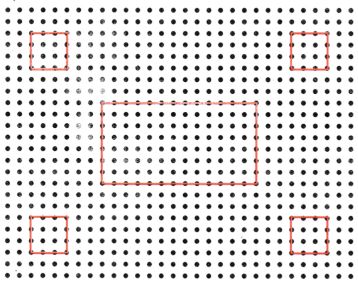
Question 2
|
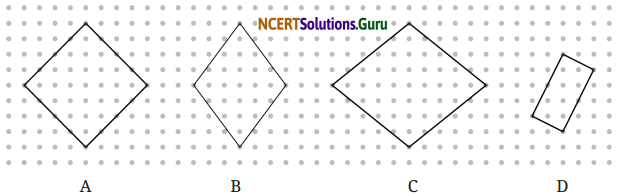
Identify if there are any squares in this collection. Use measurements if needed.
Think: Is it possible to reason out if the sides are equal or not, and if the angles are right or not without using any measuring instruments in the above figure? Can we do this by only looking at the position of corners in the dot grid?
Solution:
Only A is a square
Question 3
|
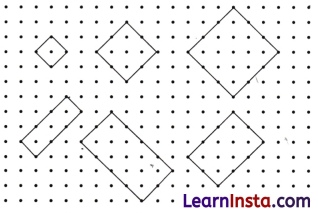
Draw at least 3 rotated squares and rectangles on a dot grid. Draw them such that their comers are on the dots. Verify if the squares and rectangles that you have drawn satisfy their respective properties.
Solution:
We can verify the properties of square and rectangles on the dot grid.
Check the length of the sides which align with the grid lines, by counting the number of dots between the comers or measure using a ruler. Further find the measure of each angle using a protractor and check whether it is 90°, i.e., the right angle or not.
3 Constructing Squares and Rectangles Construct (Pago 197)
Question 1
Solution:
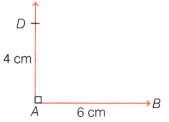
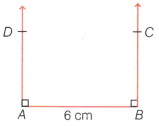
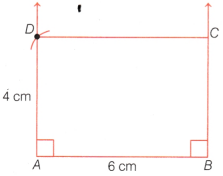
Rectangle with sides 4 cm and 6 cm.
Steps (i) Draw a,straight line AB = 6 cm using a ruler. (ii) Place the protractor on point A and mark a 90° angle from AB. (iii) Draw a line from A along this angle and measure AD 4 cm. (iv) Repeat the same process at point B to draw a line BC perpendicular to AB and also 4 cm long. (v) Join points D and C to complete the rectangle ABCD. (vi) Verify that AB and CD are equal as well as AD and BC and all angles are 90°. |

Question 2
|
Draw a rectangle of sides 2 cm and 10 cm. After drawing, check if it satisfies both the rectangle properties.
Solution:
The same solution of Question 1 only changes the length is 2 cm and 10 cm respectively.
Question 3
|
No, it is not possible. When we draw a figure whose all angle is 90° it always forms a rectangle.
4 An Exploration in Rectangles Construct (Page 199)
Question 1
Solution:
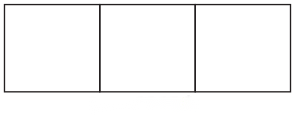
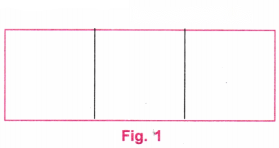
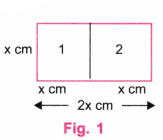
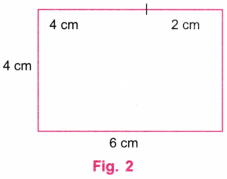
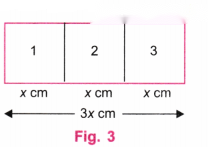
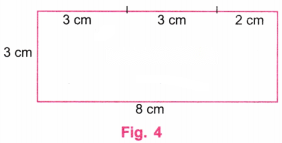
We shall draw a rectangle of the form shown in Fig. 1.
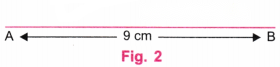
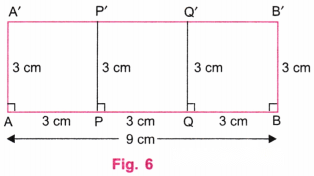
Step 1. Let us keep the vertical side of the rectangle to 3 cm. Since the rectangle is to be divided into three identical squares, the length of the rectangle must be 3 cm + 3 cm + 3 cm = 9 cm. |
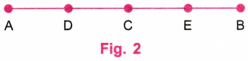
Step 2. Using a ruler, draw a line AB equal to 9 cm. (Fig. 2).
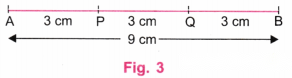
Step 3. Using a ruler, find points P and Q on AB such that AP = 3 cm and PQ = 3 cm. Here, QB is also 3 cm. (Fig. 3).
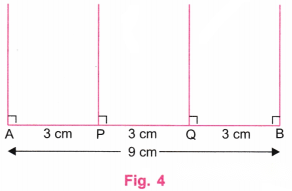
Step 4. Using a protractor, draw perpendicular lines at A, P, Q, and B. (Fig. 4).
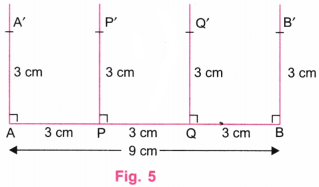
Step 5. Using a ruler, mark points A’, P’, Q’, and B’ on perpendiculars at A, P, Q, and B respectively such that AA’ = PP’ = QQ’ BR’ = 3 cm. (Fig. 5).
Step 6. Join A’ and P’, P’ and Q’, and Q’ and B’ using a ruler. Erase the lines above A’, P’, Q’, and B’. (Fig. 6).
Step 7. ABB’A’ is the required rectangle which is divided into 3 identical squares APP’A’, PQQ’P’, and QBB’Q’.
Question 2
|
4 An Exploration in Rectangles Construct (Page No. 201 – 203)
Question 1
Solution:
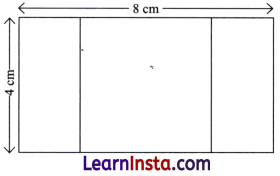
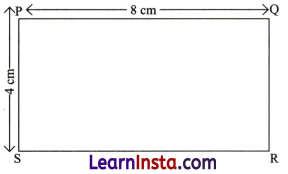
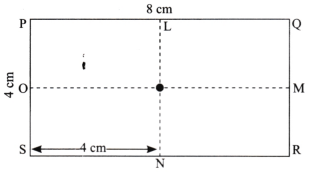
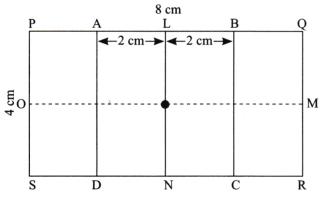
Draw a rectangle PQRS of sides 8 cm and 4 cm.
Next, draw lines LN and MO from the midpoints of opposite sides such that they intersect side PQ at L, QR at M, RS at N, and PS at O respectively. Since the centre of square and rectangle is same and the width of rectangle is 4 cm, so we draw a square of side 4 cm with the centre of rectangle and named as ABCD. ∴ The side length of the square is 4 cm and the distance between the comers of the square and the outer rectangle = PL – AL = 4 cm – 2 cm = 2 cm. |
Question 2
|
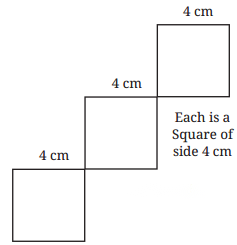
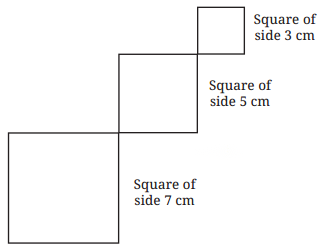
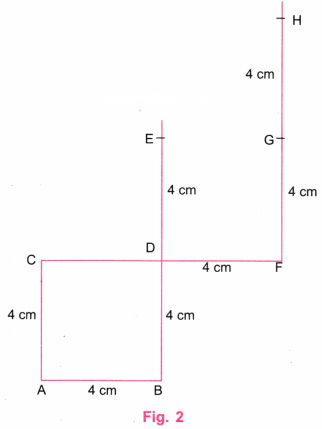
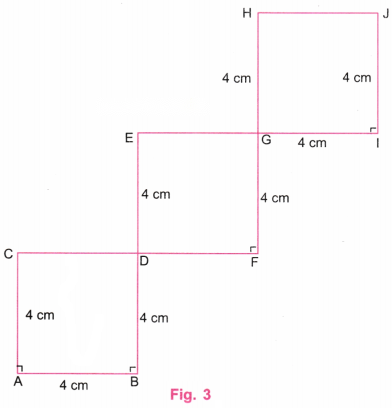
Question 3
|
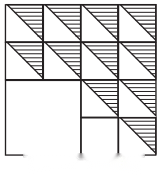
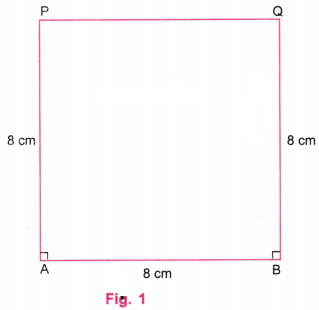
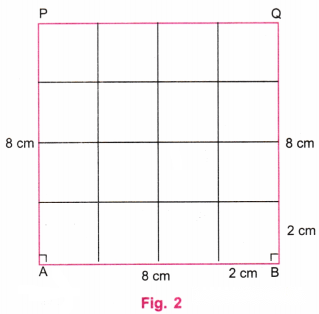
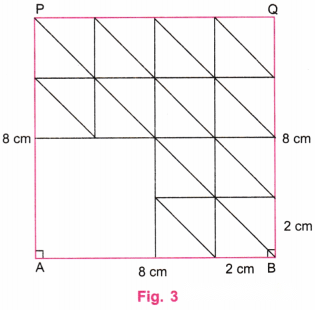
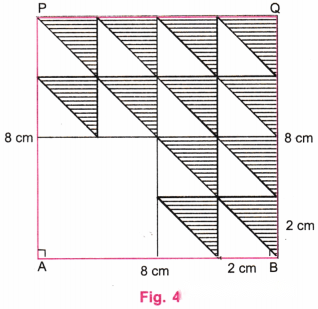
Question 4
|
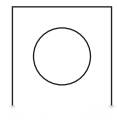
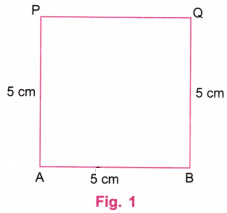
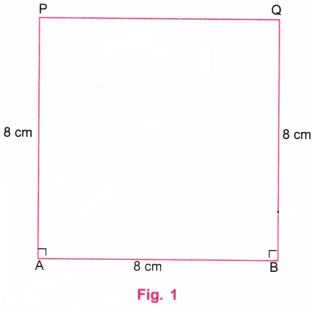
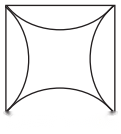
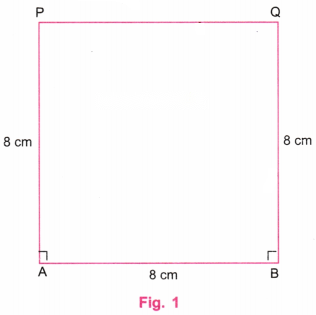
Step 1. Using a ruler, draw a line AB equal to 5 cm, say. Using a protractor, draw perpendicular lines at A and B. Using a ruler, mark point P on the perpendicular line at A such that AP = 5 cm. Using a ruler, mark point Q on the perpendicular line at B such that BQ = 5 cm. Join P and Q using a ruler. Erase the lines above P and Q (Fig. 1).
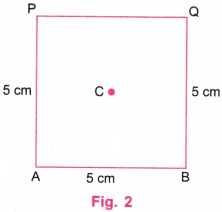
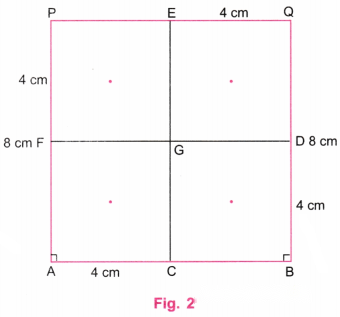
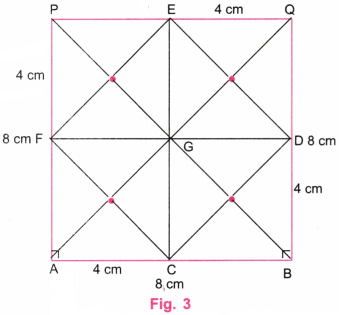
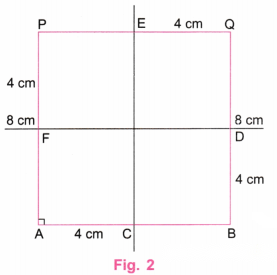
Step 2. Draw diagonals AQ and BP using a ruler. Let the diagonals intersect at C. This point is the centre of the square ABQP. Erase the diagonals AQ and BP. (Fig. 2).
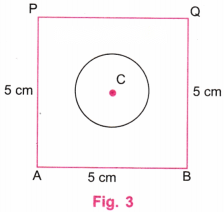
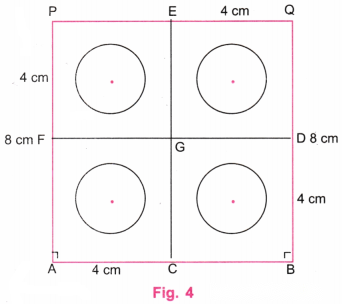
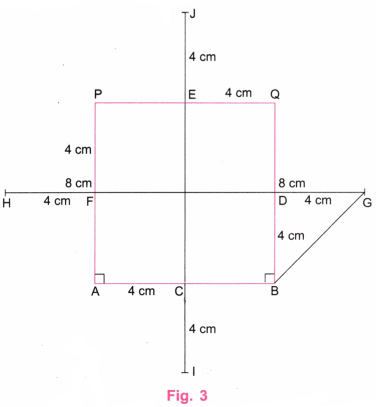
Step 3. With centre at C and a radius of 1.5 cm, say, draw a circle using a compass. (Fig. 3)
Step 4. Fig. 3 is the required “Square with a Hole”.
Question 5
|
Question 6
|
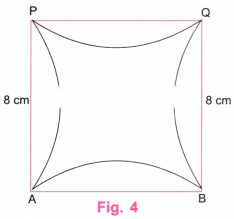
5 Exploring Diagonals of Rectangles and Squares Construct (Page No. 211)
Question 1
Solution:
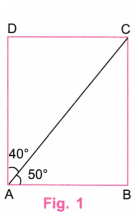
We shall draw a rectangle of the form shown in Fig. 1.
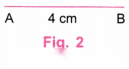
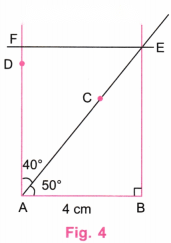
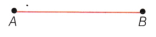
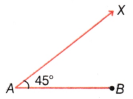
Step 1. Using a ruler, draw a line AB equal to 4 cm, say. (Fig. 2.) Step 2. Using a protractor, mark dots C and D at angles 50° and 90° (50° + 40°), keeping the central point of the protractor at A. (Fig. 3) Step 3. Using a protractor, draw a perpendicular line to AB at B and let it intersect the extended line AC at E. (Fig 3) |
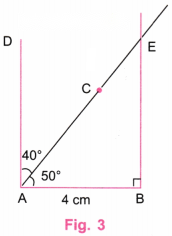
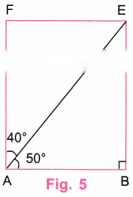
Step 4. Using a protractor, draw a perpendicular line to BE at E and let it intersect the extended line AD at F. (Fig 4)
Step 5. Erase the extra lines in Fig. 4. (Fig. 5)
Step 6. Fig. 5 is the required rectangle in which one of the diagonals divides the opposite angles into 50° and 40°.
Question 2
|
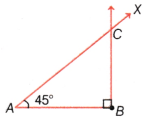
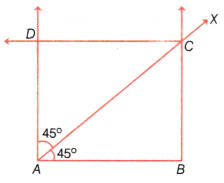
Question 3
|
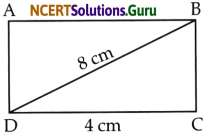
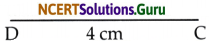
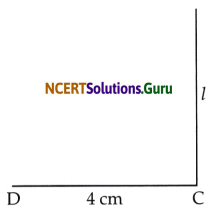
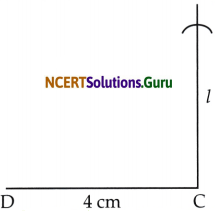
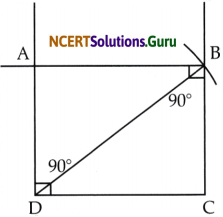
Question 4
|
6 Points Equidistant from Two Given Points Construct (Page No. 215)
Question 1
Solution:
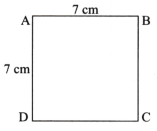
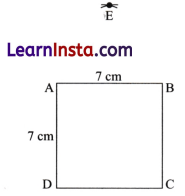
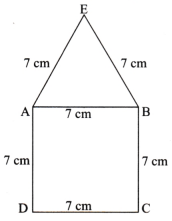
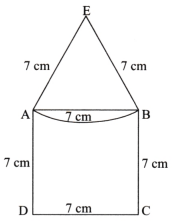
First draw a square of side 7 cm, named as ABCD.
Now, using a compass draw arcs above the side AB of radius 7 cm from points A and B. Let the arcs intersect at point E. Joint A to E and B to E by straight lines Now, take 7 cm radius in the compass and from E, draw the arc touching A and B as shown in the figure. |
Question 2
|
Question 3
|
CBSE 2026-27 Board Exam Preparation & Practice Papers
Free Chapter Notes & Question Bank by BoardExams.in