NCERT Solutions • Class 6 Social Science (Exploring Society) |
Chapter-wiseExploring Society India and Beyond Class 6 Solutionsand Class 6 Social Science SST Chapter 4 Timeline and Sources of History Question Answer NCERT Solutions are useful for focused study.
Timeline and Sources of History NCERT Class 6th SST Chapter 4 Question Answer
Timeline and Sources of History Class 6 Questions and Answers
The Big Questions (Page 59)
Question 1
|
Question 2
|
Question 3
|
Let’s Explore
Question 1
|
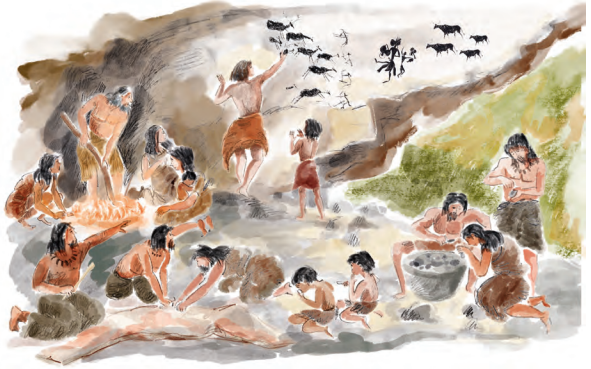
Hunting and Gathering: Early humans in rock shelters engaged in hunting animals and gathering wild plants for food. Evidence of this activity includes remains of animal bones, tools made from stone and bone, and plant remnants.
2. Tool Making: Stone tools, such as hand axes, scrapers, and arrowheads, were crafted by early humans in rock shelters. These tools were essential for hunting, processing food, and other daily tasks. The presence of flakes and cores indicates the tool-making process.
3. Fire Making and Usage: Fire played a crucial role in the lives of early hum
Art and Symbolism: Rock shelters often feature prehistoric art, including paintings and carvings on the walls. These artworks depict animals, human figures, and abstract symbols, reflecting early human culture, beliefs, and communication methods.
5. Shelter and Living Spaces: Rock shelters served as living spaces, providing protection from harsh weather and predators. Evidence of structured living areas, such as sleeping spots, storage areas, and communal spaces, indicates how early humans organized their living quarters.
6. Social and Ritual Activities: Evidence suggests that rock shelters were also used for social and ritual activities. This includes the presence of burial sites, ritualistic objects, and communal spaces where groups of early humans might have gathered for ceremonies or social interactions.
7. Food Preparation: Early humans prepared food in rock shelters, as indicated by grinding stones, hearths, and remains of processed plant and animal materials. These activities included cooking, butchering animals, and processing plants for consumption.
Question 2
Solution:
The following activities can be observed from the given image
|
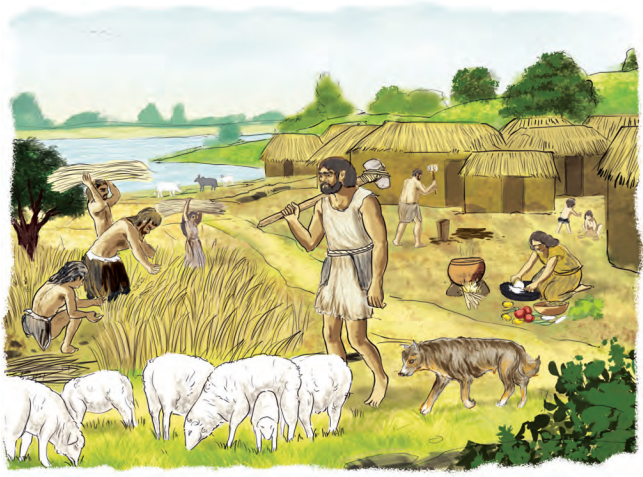
Questions, Activities and Projects (Page 74)
Question 1
|
My Paternal Great-Grandfather was Amar Singh, farmer, born in 1910 in this village. I got this informationifrom family stories and an old photograph.
Question 2
|
Question 3
|

(b) If King Chandragupta was born in 320 CE, which century did he belong to? And how many years was that after the Buddha’s birth?
Answer:
King Chandragupta was bom in the 4th century CE.
Given King Chandragupta was bom in 320 CE. BuddhaJ was bom in 560 BCE.
Hence 560 + 320 – 1 = 880 – 1 = 879 years
That means King Chandragupta was born 879 years after the Buddha’s birth.
(c) Rani of Jhansi was born in 1828. Which century did she belong to? How many years was that before India’s Independence?
Answer:
Rani of Jhansi was born in the 19th century CE. India gained independence in 1947.
Hence:
1947- 1828 = 119 years
That means Rani of Jhansi was born 119 years before the India’s independence.
(d) Turn ‘12,000 years ago’ into a date.
Answer:
Assuming the current year is 2024 CE, 12,000 years ago would be 12,000 – 2024 + 1= 9977 BCE.
Question 4
|
Museum Visit Report
Question 5
|
Class 6 Social Science Question Answer
CBSE 2026-27 Board Exam Preparation & Practice Papers
Free Chapter Notes & Question Bank by BoardExams.in