NCERT Solutions • Class 6 Social Science (Exploring Society) |
Chapter-wiseExploring Society India and Beyond Class 6 Solutionsand Class 6 Social Science SST Chapter 5 India, That is Bharat Question Answer NCERT Solutions are useful for focused study.
India, That is Bharat NCERT Class 6th SST Chapter 5 Question Answer
India, That is Bharat Class 6 Questions and Answers
The Big Questions (Page 75)
Question 1
|
India’s landscape includes a wide range of features. In the north, the towering Himalayan mountain range forms a natural barrier. The central part of India is characterized by fertile plains, especially the Indo-Gangetic Plain, which is home to the Ganges River, one of the most important rivers in the country.
The western part of India has the Thar Desert, while the southern part features the Deccan Plateau and several coastal plains. India also has a number of significant islands, including the Andaman and Nicobar Islands in the Bay of Bengal and the Lakshadweep Islands in the Arabian Sea.
Question 2
|
Think About It
Question 1
|
Question 2
|
Let’s Explore
Question 1
|
Question 2
|
Question 3
|
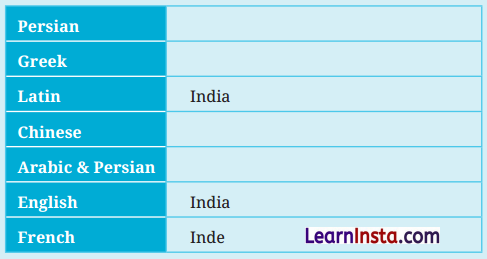
Persian | Sindhu |
Greek | Indike or Indoi |
Latin | India |
Chinese | Yindu |
Arabic & Persian | Hindustan |
English | India |
French | Inde |
Questions, Activities and Projects (Page 84)
Question 1
|
For example
The Vedas which are India’s oldest religious texts have given rise to several schools of thought. The Upanishads and the different schools of Indian philosophy discussed many issues regarding the nature of the ultimate reality. Buddhism and Jainism departed from the authority of the Vedas laying emphasis on different values and practices. But common to all belief systems which helped to Unite India spiritually was belief in the need to detach from material things and understand the nature of the ultimate reality.
Similarly our culture has evolved due to fusion of our various religious beliefs systems which have contributed to our rich heritage of art, sculpture, music, painting etc.
Question 2
|
(b) The Vishnu Purana describes the entire Subcontinent.
Answer:
True
(c) In Ashoka’s time, ‘Jambudvipa’ included what is today India, parts of Afghanistan, Bangladesh and Pakistan.
Answer:
True
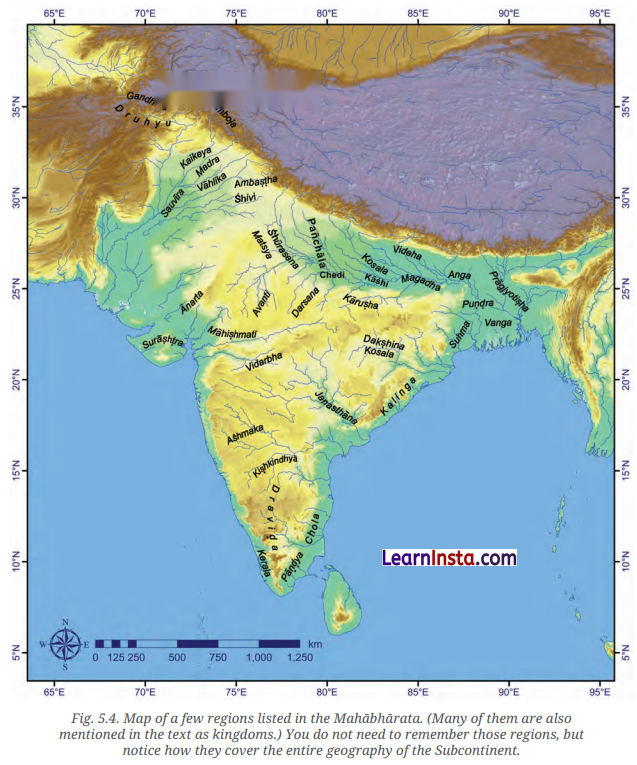
(d) The Mahabharata lists many regions, including Kashmir, Kutch, and Kerala.
Answer:
True
(e) The term ‘Hindustan’ first appeared in a Greek inscription more than 2,000 years ago.
Answer:
False
(f) In ancient Persian, the word ‘Hindu’ refers to the Hindu religion.
Answer:
False
(g) ‘Bharata’ is a name given to India by foreign travellers.
Answer:
False
Question 3
|
Question 4
|
Class 6 Social Science Question Answer
CBSE 2026-27 Board Exam Preparation & Practice Papers
Free Chapter Notes & Question Bank by BoardExams.in