BoardExams.in
Class 7scienceCBSE 2026-27

NCERT Solutions for Class 7 science Chapter 8: Measurement of Time and Motion Class 7

14 Solved Questions & Exercises8 min estimated readingUpdated 2026-09-16
Top Sponsor / Ad Space

CBSE 2026-27 Board Exam Preparation & Practice Papers

Free Chapter Notes & Question Bank by BoardExams.in

NCERT Solutions • Class 7 Science (Curiosity)
Chapter 8: Measurement of Time and Motion Class 7
Latest Rationalised Syllabus (NEP 2026-27)

Chapter-wiseChapter 8 Measurement of Time and Motion Class 7 Questions and Answers are useful for focused study.

Class 7 Science Chapter 8 Measurement of Time and Motion Question Answer

Science Class 7 Chapter 8 Question Answer Measurement of Time and Motion

Measurement of Time and Motion Class 7 Question Answer (InText)

Question 1


How was time measured when there were no clocks and watches? (Page 106)
Answer:
Before the invention of clocks and watches, time was measured using instruments like sundials, water clocks, hourgiasses and candle clocks.

Question 2


For races covering the same distance, we can tell who was faster by measuring time. But how can we tell that when comparing races for different distances? (Page 112)
Answer:
If races cover the same distance, we can tell who was faster by measuring the time taken.

Question 3


I once watched a part of marathon on a straight road stretch. I noticed that some people seemed to be running at the same speed during that distance while some people would speed up or slow down. How were their motion different? (Page 116)
Answer:
People who run at. the same speed have uniform motion, but those who speed up or slow down have non-uniform motion.

NCERT Class 7 Science Chapter 8 Question Answer Measurement of Time and Motion (Exercise)

Question 1


Calculate the speed of a car that travels 150 metres in 10 seconds. Express your answer in km/h.
Answer:
Distance = 150 m
Time taken = 10 s
SPeed = =
SPeed in km/hr = 15 × = 54 km/h

Question 2


A runner completes 400 metres in 50 seconds. Another runner completes the same distance in 45 seconds. Who has a greater speed and by how much?
Answer:
Runner 1:
Distance = 400 m,
Time = 50 s
SPeed = = = 8 m/s

Runner 2:
Distance = 400 m,
Time = 50 s
SPeed = = = 8.89 m/s
Difference = 8.89 – 8 = 0.89 m/s
Hence, speed of runner 2 is greater by approximately 0.89 m/s.

Question 3


A train travels at a speed of 25 m/s and covers a distance of360 km. How much time does it take?
Answer:
Speed = 25 m/s
Distance = 360 km = 3,60,000 m
Time taken = =
= 14,400s
⇒ 240 mins
⇒ 4 hours

Question 4


A train travels 180 km in 3 h. Find its speed in:
(i) km/h
(ii) m/s
(iii) What distance will it travel in 4h if it maintains the same speed throughout the journey?
Answer:
Distance = 180 km, time = 3h
(i) Speed = = 60 Km/h
(ii) Speed in m/s= 60 × = 16.677 m/s
(iii) Time = 4h, Speed = 60 km/h
Distance = Speed × Time
= 60 × 4 = 240 km

Question 5


The fastest galloping horse can reach the speed of approximately 18 m/s. How does this compare to the speed of a train moving at 72 km/h?
Speed of horse = 18 m/s
Speed of train = 72 km/h = 72 × = 20 m/s
The train is faster by 2 rn/s than the fastest galloping horse.

Question 6


Distinguish between uniform and non-uniform motion using the example of a car moving on a straight highway with no traffic and a car moving in city traffic.
Answer:
Uniform motion: If an objects covers equal distances in equal distance in equal intervals of time, its motion is said to be uniform. A car moving on a straight highway with no traffic is an example of uniform motion.

Non-uniform motion: If an object covers unequal distances in equal interval of time, its motion is said to be non-uniform. A car moving in a traffic is an example of nonuniform motion.

Question 7


Data for an object covering distances in different intervals of time are given in the following table. If the object is in uniform motion, fill in the gaps in the table.

Time (s)

0

10

20

30

50

70

Distance (m)

0

8

24

32

40

56

Solution:

In uniform motion, object covers equal distances in equal intervals of time. Hence, the speed of an object remains constant throughout the motion.

Time (s)

0

10

20

30

40

50

60

70

Distance (m)

0

8

16

24

32

40

48

56

The object covers 8 m in every 10 seconds. Hence, the speed of an object remains constant at 0.8 m/s throughout the motion.

Question 8


A car covers 60 km in the first hour, 70 km in the second hour, and 50 km in the third hour. Is the motion uniform? Justify your Answer:
Find the average speed of the car.
The car covers different distances in each hour. Hence, the motion of the car is nonuniform.
Total distance = 60 km + 70 km + 50 km = 180 km
Total time = 3 hours
Average speed =
= = 60 km/h.
Hence, the average speed of the car is 60 km/h.

Question 9


Which type of motion is more common in daily life—uniform or non-uniform? Provide three examples from your experience to support your answer.
Answer:
In our daily life, most motions are nonuniform because object do not move at the same speed all the time. Their speed changes due to factors like traffic, rough or uneven roads and other obstacles.

Examples:
• Travelling in a bus on an uneven road
• Playing cricket
• Walking through a crowded market

Question 10


Data for the motion of an object are given in the following table. State whether the speed of the object is uniform or non-uniform. Find the average speed.

Time interval (s)

Distance (m)

0-10

6 – 0 = 6

10-20

10 – 6 = 4

20-30

16 – 10 = 6

30-40

21 – 16 = 5

40-50

29 – 21 = 8

50-60

35 – 29 = 6

60-70

42 – 35 = 7

70-80

45 – 42 = 3

80-90

55 – 45 = 10

90-100

60 – 55 = 5

The object exhibits non-uniform motion, because it covers unequal distances in equal time intervals.

Total distance travelled = 60 m
Total time taken = 100 s
Average speed =
=
= 0.6 m/s

Question 11


A vehicle moves along a straight line and covers a distance of 2 km. In the first 500 m, it moves with a speed of 10 m/s and in the next 500 m, it moves with a speed of 5 m/s. With what speed should it move the remaining distance so that the journey is complete in 200 s? What is the average speed of the vehicle for the entire journey?
Answer:
Given
Total distance = 2 km = 2000 m,
Total time = 200
Step 1: Time taken to cover the first 500 m
Time = = = 50 s

Step 2: Time taken to cover the next 500 m
Time = = 100 s

Step 3: Remaining distance = 2000 – 1000 = 1000 m
Remaining time = 200 – 150 = 50 s

Step 4: Speed required to cover the remaining 1000 m
Speed = = 20 m/s

Step 5: Average speed = = = 10 m/s

Class 7 Measurement of Time and Motion Question Answer (Activities)

Activity 8.1: Let Us Construct (Page 107)

Solution:

Do it yourself.

Activity 8.2: Let us Experiment (Pages 109-110)

Solution:

Do it yourself.

Activity 8.3: Let Us Identify (Page 112)

Look at the wall clock shown in Fig. 8.9 carefully. What is the smallest interval of time you can measure with it?

• One second is the smallest interval of time that we can measure using this clock.
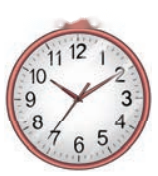
Measurement of Time and Motion Class 7 Diagram 1

Activity 8.4: Let Us Calculate (Pages 114-115)

Table 8.2: Finding the speed of trains Name of the railway station nearest to your place of stay Delhi.

Name of the train

Name of the next station

Distance till the next station (km)

Time taken till the next station(N

Speed of the train between these two stations (km/h)

Vande Bharat

Ambala Cantt.

214

2h 12 min

97.27

Shatabdi Express

Aligarh

158

1h 30 min

105.33

Tejas Express

Kota

465

2h

232.5

Shan-e-Punjab

Panipat

99

1h 25 min

69.88

In-Article Ad Slot

CBSE 2026-27 Board Exam Preparation & Practice Papers

Free Chapter Notes & Question Bank by BoardExams.in