NCERT Solutions • Class 7 Social Science (Exploring Society) |
Students can keepExploring Society India and Beyond Class 7 Solutionsand Class 7 Social Science SST Chapter 10 The Constitution of India An Introduction Question Answer NCERT Solutions handy for quick reference during exams.
Class 7 Social Science Chapter 10 Question Answer The Constitution of India An Introduction
NCERT Class 7 Social Science Chapter 10 The Constitution of India An Introduction Questions and Answers Solutions
The Constitution of India An Introduction Class 7 Question Answer (In-Text)
The Big Questions? (page 209)
Question 1
|
Question 2
|
Question 3
|
Question 4
|
It is relevant even today as:
Let’s Explore
Question 1
|
The team captains confer with the referee and look at the rules. They then agree that the player was indeed ‘out’, and your team has won the state-level trophy. Discuss in your group what might have happened if there was no official rulebook that the referee and the team captains could refer to. What is required to ensure everyone agrees to abide by the rulebook? What might happen if the team captains did not agree to refer to the rulebook at all?
Think of a game that you play often and list the rules you follow. Each group will then present their set of rules to the rest ofthe class. Listen to each presentation, discuss the rules, and work together to decide on a common set of rules for the game. What challenges do you face in reaching a consensus on rules that everyone agrees with? What could be the ‘rulebook’ for a country? How would it be made? (page 211 – 212)
Answer:
If there was no official rulebook during the kabaddi match, the dispute between the two teams would have been very difficult to solve. Both sides would have kept arguing about what happened, and the match might have ended in confusion or even a fight. Without clear rules, no one would know who was right or wrong. It is very important to have a rulebook that everyone agrees to follow so that the game is fair for all.
To make sure everyone agrees to follow the rulebook, all the players and team leaders must respect the rules and the referee. Before the game begins, the rules should be explained clearly to both teams. If there is a disagreement during the match, the referee and team captains should refer to the rulebook together, just like in the kabaddi match, to make a fair decision.
If the team captains refused to use the rulebook, the argument might never end. The game would not be fair anymore, and no one would be happy with the result. Players could start cheating or making their own rales, which would rain the fun and spirit of the game.
In any game we play regularly, like kho-kho, cricket, or football, we follow certain rules. For example, in cricket, we know how many overs each team plays, how a batter gets out, and how runs are counted.
When everyone agrees on these rales, the game becomes fair and fun for all players. Sometimes, it can be hard to agree on rules, especially if some players want to change them. But by listening to each other and discussing calmly, we can come to a common set of rales that everyone accepts.
Just like games have rulebooks, a country also needs a rulebook. The rulebook of a country is called the Constitution. It tells us how the government works, what rights people have, and how problems should be solved. It is made with the help of leaders and experts who discuss and write down the rules for (he whole country. Everyone, including the government, must follow the Constitution to keep peace, fairness, and justice in the country.
Question 2
|
Question 3
|
There were many powerful women in history who were leaders, scholars, and warriors. However, over time, social customs and practices became unfair, and women were not treated equally. Begum Aizaz Rasul believed that the Constitution was helping India return to its original values by making the law fair for women again.
This quotation shows how the Constitution gave women the legal right to equality and dignity in the new Indian Republic.
Question 4
|
The Supreme Court agreed and ruled that hoisting the national flag is a part of the Right to Freedom of Speech and Expression, provided it is done with respect and dignity. Since then, every Indian citizen has the right to fly the tricolour, but must follow the Flag Code of India to avoid dishonouring it.
Question 5
|
Question 6
|
Amendment | Year | Key Feature |
101st Amendment | 2016 | Introduced Goods and Services Tax (GST), a uniform indirect tax system across the country. |
102nd Amendment | 2018 | Gave constitutional status to the National Commission for Backward Classes (NCBC). |
103rd Amendment | 2019 | Provided 10% reservation for Economically Weaker Sections (EWS) in education and government jobs. |
104th Amendment | 2020 | Removed Anglo-Indian reserved seats in Lok Sabha and State Assemblies. |
105th Amendmen | 2021 | Restored state governments’ power to identify and maintain their own list of OBCs. |
Question 7
|
Features of the Preamble | How we see them in our daily lives |
Sovereign | |
Secular | A person does not have to take permission from the State to practice the rituals of their religion if the practice does not interfere with anyone else’s day-to-day life. |
Republic | |
Justice | The State provides equal oppor-tunity to all in jobs, regardless of gender, caste, religion, etc. |
Liberty | |
Equality | |
Fraternity |
Features of the Preamble | How we see them in our daily lives |
Sovereign | The people have supreme right to make decisions on internal as well as external matters. No external power can dictate the government of India. |
Secular | A person does not have to take permission from the State to practice the rituals of their religion if the practice does not interfere with anyone else’s day-to-day life. |
Republic | In India, we elect our leaders through elections, and political power is not inherited through family ties or mon¬archy, ensuring the government is accountable to the people. |
Justice | The State provides equal oppor-tunity to all in jobs, regardless of gender, caste, religion, etc. |
Liberty | People are free to express their opinions, practice their beliefs, and lead their lives without unjust restrictions or fear of persecution. |
Equality | All individuals are treated equally be¬fore the law, and no one is discriminated against based on their gender, caste, religion, or social background. |
Fraternity | People from different backgrounds, cultures, and religions live together as equals, supporting each other and fostering a sense of unity in the community. |
Class 7 SST Chapter 10 The Constitution of India An Introduction Question Answer (Exercise)
Question 1
|
Question 2
|
(b) Key Feature/Value: Right to Education – This reflects the Constitution’s emphasis on providing free and compulsory education for children aged 6 to 14 years under Article 21 A.
(c) Key Feature/Value: Fundamental Duty – This reflects the responsibility of parents, as encouraged in the Constitution, to ensure the well-being and education of their children.
(d) Key Feature/Value: Equality before Law – This reflects the constitutional value of equality, ensuring that no one discriminated against based on caste, gender, or religion.
Question 3
|
However, in practice, disparities such as economic inequality, social bias, and discrimination still persist, which can affect how equality is experienced by different groups in society. These issues highlight the gap between legal equality and social equality, suggesting that while the law provides for equality, real-life challenges remain in its full implementation.
Question 4
|
Question 5
|
India’s civilisational heritage also influenced the Constitution by emphasizing values like non violence, tolerance, respect for diversity, and social by promoting secularism, justice, and respect for individual rights, all of which are rooted in India’s long history of philosophical and ethical thought.
Question 6
|
As citizens, we can contribute by being aware of our rights and duties, participating in democratic processes, and working towards creating a more inclusive and equitable society. Additionally, we should promote education, respect diversity, and engage in peaceful dialogue to address issues of inequality and injustice.
Question 7
|
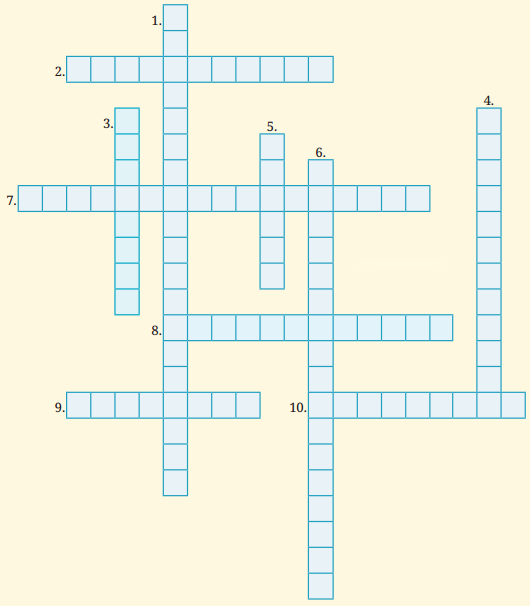
Down
1. The group of people who wrote the Indian Constitution.
3. The statement at the beginning of the Constitution that tells us the values it upholds.
4. The document that lays out the rules and laws of a country.
5. The gas used to preserve the original Constitution safely.
6. Basic rights given to every citizen, like freedom and equality.
Answer:
Across
2. Legislature
7. Fundamental Duties
8. Supreme Court
9. Republic
10. Amendment
Down
1. Constituent Assembly
3. Preamble
4. Constitution
5. Helium
6. Fundamental Rights
CBSE 2026-27 Board Exam Preparation & Practice Papers
Free Chapter Notes & Question Bank by BoardExams.in