NCERT Solutions • Class 7 Social Science (Exploring Society) |
Students can keepExploring Society India and Beyond Class 7 Solutionsand Class 7 Social Science SST Chapter 3 Climates of India Question Answer NCERT Solutions handy for quick reference during exams.
Class 7 Social Science Chapter 3 Question Answer Climates of India
NCERT Class 7 Social Science Chapter 3 Climates of India Questions and Answers Solutions
Climates of India Class 7 Question Answer (In-Text)
The Big Questions? (Page 45)
Question 1
|
Question 2
|
Question 3
|
(ii) Culture: Climate influences what people wear, eat, and how they live. In cold places, people wear thick clothes and build warm houses. In hot areas, clothes are light and houses are made to stay cool. Local festivals and traditions also depend on the weather and seasons.
(iii) Society: Climate affects where people live and how they interact. In harsh climates, fewer people live there. In comfortable climates, more people settle. Natural disasters like floods or droughts can make people move to safer places and change their way of life.
Question 4
|
Question 5
|
Let’s Explore (Page 47)
Question 1
|
Question 2
|
Question 3
|
The local names of trees that shed their leaves vary by region. For example:
Nature follows this cycle to help trees rest during unfavourable conditions and grow fresh leaves when the climate improves.
Question 4
|
Question 5
|
Question 6
|
Question 7
|
Question 8
|
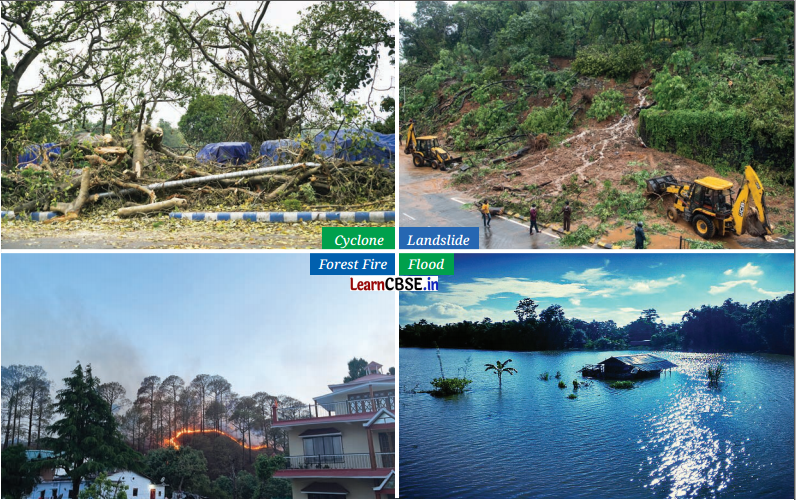
Floods pose a serious threat to people by causing. displacement, injury, and death. Floodwaters often lead to outbreaks of waterborne diseases, affecting public health. For plants, floods can wash away crops and erode fertile soil, leading to agricultural losses. Animals are also at risk, with many losing their habitats and livestock perishing. The economy suffers from crop failures, damage to homes and infrastructure, and the high cost of recovery and rebuilding efforts.
Landslides result from the sudden movement of earth, which can lead to significant destruction. For people, landslides can cause injury, loss of life, and the displacement of entire communities. The force of the landslide destroys plants and crops, leaving large areas of land barren. Animals lose their habitats, and many perish in the destruction. Economically, landslides can disrupt transportation, damage infrastructure, and affect agricultural productivity, leading to long-term financial strain. Forest fires can cause widespread destruction to both the environment and human life.
People suffer from health issues due to smoke inhalation, and many may lose their homes. Forest fires decimate plants, destroying forests and leading to soil degradation. Animals are often killed or displaced, losing their natural habitats. Economically, forest fires impact timber production, tourism, and the overall environmental health of a region, resulting in substantial economic losses.
(ii) In groups of four or five, identify in each of the above disasters the part of natural causes and the part of human causes. Compare your conclusions.
Answer:
Do it yourself.
(iii) Discuss in the same groups series of preventive measures that could help avoid the above disasters.
Answer:
Do it yourself.
Think About it
Question 1
|
Class 7 SST Chapter 3 Climates of India Question Answer (Exercise)
Question 1
|
Column A | Column B |
Question 1 (1)
Latitude | (a) Brings wet air to India during summer |
2. Altitude | (b) Creates different climates in the north and south |
3. Proximity to the ocean | (c) Keeps higher places cooler |
4. Monsoon winds | (d) Moderates the temperature |
Column A | Column B |
Question 2 (1)
Latitude | (c) Keeps higher places cooler |
2. Altitude | (d) Moderates the temperature |
3. Proximity to the ocean | (a) Brings wet air to India during summer |
4. Monsoon winds | (d) Moderates the temperature |
Question 2
Solution:
Weather refers to the short-term atmospheric conditions of a place, while climate is the long-term average of weather patterns over many years.
|
(ii) Why do places near the ocean have milder temperatures than places far away from it?
Answer:
Places near the ocean have milder temperatures because the ocean moderates the temperature, preventing extreme heat in summer and severe cold in winter.
(iii) What role do monsoon winds play in affecting India’s climate?
Answer:
Monsoon winds bring wet air to India during summer, causing heavy rainfall and influencing the overall climate of the region.
(iv) Why is Chennai warm or hot throughout the year, while Leh is cold?
Answer:
Chennai remains hot throughout the year because of its proximity to the ocean, which keeps temperatures stable, while Leh is cold because it is at a high altitude, making it cooler.
Question 3
|
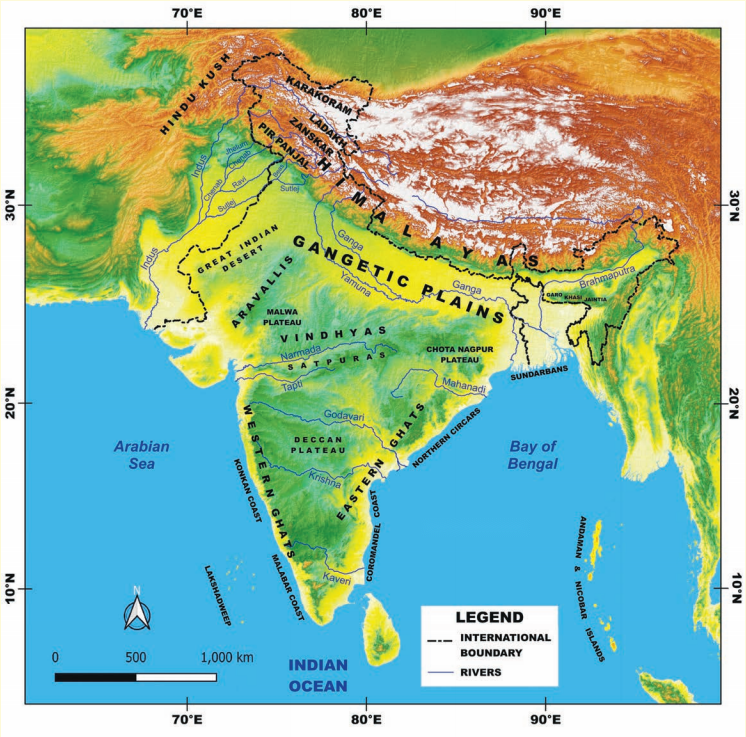
Leh
Chennai
Delhi
Panaji
Jaipur
Question 4
|
Question 5
|
Question 6
|
Question 7
|
Floods have severe impacts on people, property, and the environment. They destroy homes, roads, and farmlands, leaving many people homeless. Floodwaters contaminate drinking water, leading to diseases. The loss of crops and livestock affects food supply and the economy. Sometimes, floods also result in loss of lives and displacement of communities.
To reduce the impact of floods, individuals can avoid building houses in flood-prone areas and keep emergency supplies ready. Communities can build embankments, plant trees, and clean drainage systems to prevent waterlogging. The government should construct strong dams, improve weather forecasting, and provide relief to affected people. Proper planning and awareness can help reduce the destruction caused by floods.